Meet Harven
This imaginative 3-year-old is thriving after surgery to treat an anorectal malformation — thanks to his parents, who never gave up in their push for answers. The team in our Colorectal and Pelvic Malformation Center is by his side, too.


Anorectal malformations are birth defects in which the anus and rectum (the lower end of the digestive tract) don’t develop properly. They occur in an estimated 1 in 4,000 newborns and can range from mild to complex.
Anorectal malformations include several different abnormalities, including:
Anorectal malformations, including imperforate anus, can affect male and female babies in different ways.
In boys, the main anorectal malformations are perineal fistula, rectobulbarurethral fistula, rectoprostatic fistula and rectobladderneck fistula.
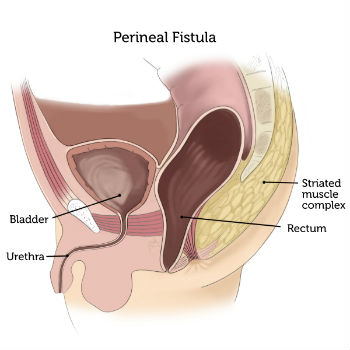

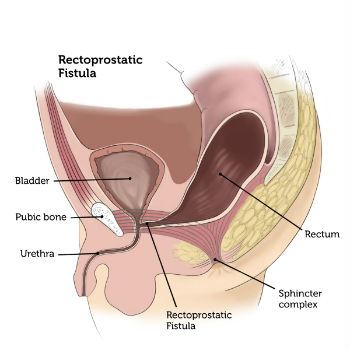
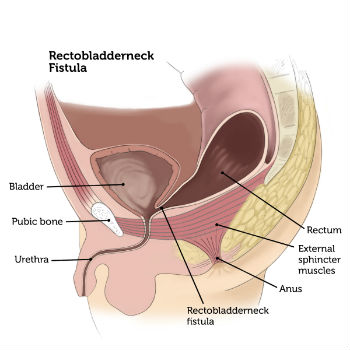
In girls, the main anorectal malformations are rectoperineal fistula, rectovestibular fistula and cloaca.
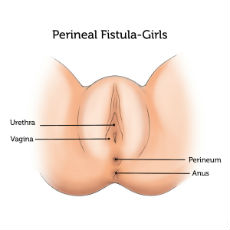
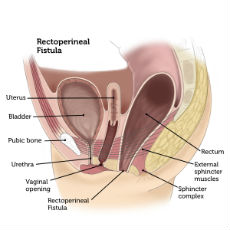
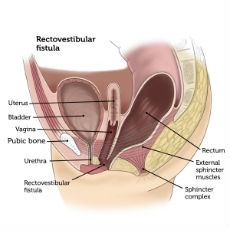
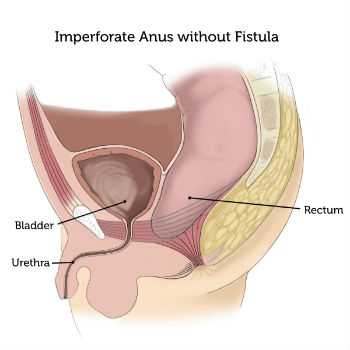
A type of anorectal malformation called imperforate anus can occur in both boys and girls.

This imaginative 3-year-old is thriving after surgery to treat an anorectal malformation — thanks to his parents, who never gave up in their push for answers. The team in our Colorectal and Pelvic Malformation Center is by his side, too.
Anorectal malformations such as imperforate anus cause abnormalities in the way a baby has a bowel movement. These problems vary depending on the type of malformation:
As a fetus is growing in its mother's uterus, all organ systems are developing and maturing at different rates. Certain steps have to take place in the seventh to tenth weeks of gestation for the rectum and anus to separate from the urinary tract and form properly. Sometimes these steps do not occur as they should, and the rectum, anus or both may not develop normally.
Most of the time, the cause for an anorectal malformation is unknown, but in rare cases, it appears to run in families. Boys are at a slightly higher risk for this abnormality than girls.
Up to one third of babies who have genetic syndromes, chromosomal abnormalities or other congenital defects also have imperforate anus or other anorectal malformations. These genetic syndromes and other congenital problems include:
Your baby's physician will perform a physical examination when your baby is born, and will look at the anus to see if it is open and in the proper position. If the doctor suspects an anorectal malformation, he or she may order diagnostic imaging to get more details on the severity of the problem:
The majority of babies with anorectal malformations will need to have surgery to correct the problem. The type and number of operations necessary depends on the type and extent of the abnormality.
Babies who have the type of malformation that causes the anal passage to be narrow may not need an operation. A procedure known as anal dilatation may be done periodically to help stretch the anal muscles so stool can pass through it easily. However, if the anal opening is positioned incorrectly, an operation may be needed to relocate it.
Babies with this type of malformation will need to have the membrane removed during surgery. Anal dilatations may need to be done afterward to help prevent narrowing of the anal passage.
Anorectal malformations can be complex issues. The Colorectal and Pelvic Malformation Center at Boston Children’s Hospital includes a comprehensive team of colorectal surgeons, urologists, gynecologists and gastroenterologists who evaluate the problem using advanced diagnostic tests and then provide a coordinated plan of care for children with anorectal malformations such as imperforate anus. Because the surgery is only the first step for many of these children, the center not only offers reconstructive surgical care, but lifelong management of bowel, bladder and reproductive issues as well.
We offer therapies that are limited to only a few centers around the world, such as:
Our team also includes nutritionists, psychologists, and other experts to improve the quality of life for each child entrusted to our care.