Popular Search Terms
Overview
Symptoms & Causes
Diagnosis & Treatments
Patient Resources
Related Programs & Services
Contact Us


What is a fractured tibia-fibula?
A broken tibia-fibula is a fracture in the lower leg that happens when a fall or blow places more pressure on the bones than they can withstand.
A tibia-fibula fracture is a serious injury that requires prompt immediate medical attention. With timely and proper treatment, a broken tibia-fibula can heal completely.
What are the tibia and fibula?
The tibia and fibula are the two long bones in the lower leg. They connect the knee and ankle, but they are separate bones.
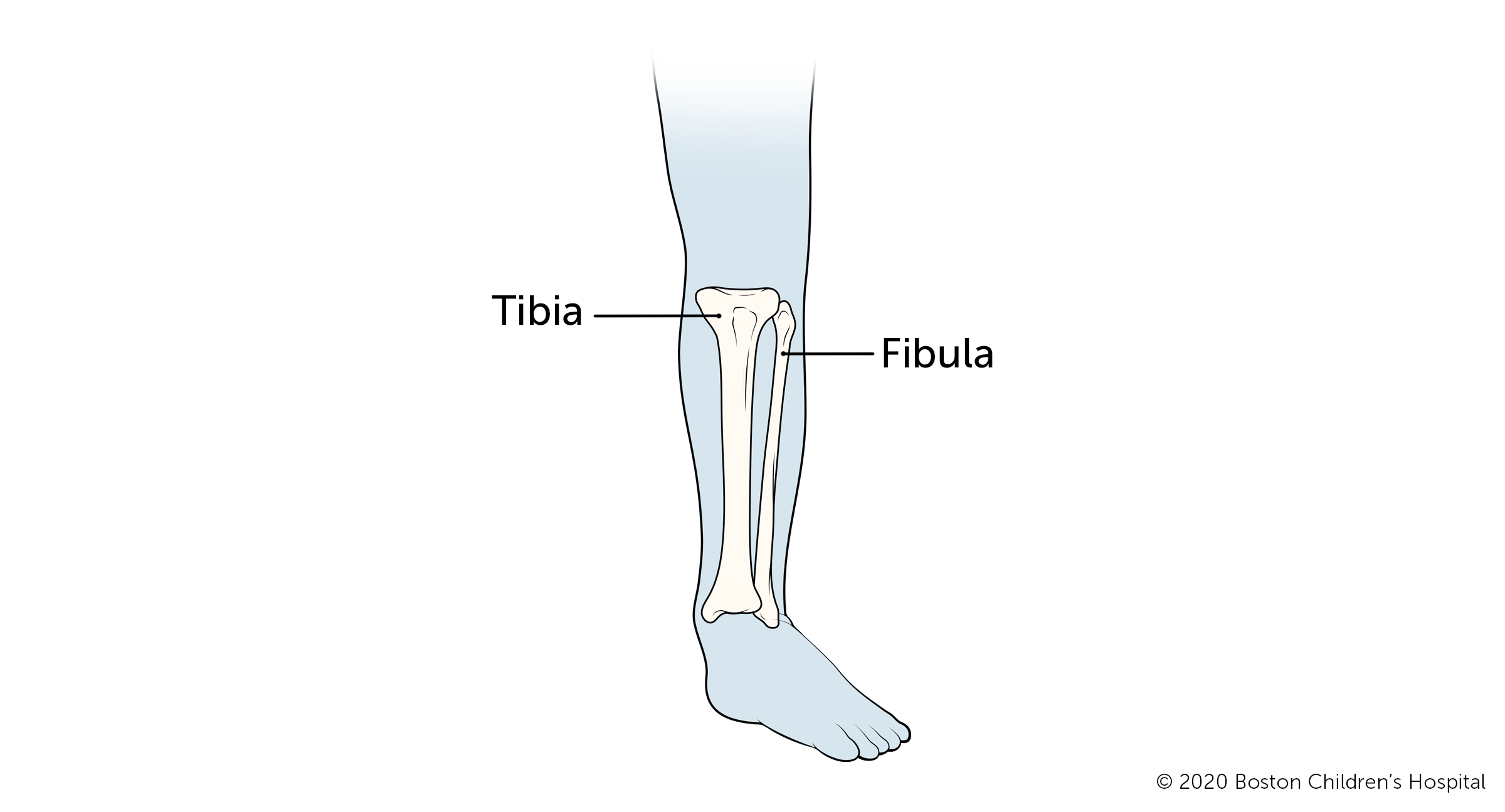
The tibia is the shinbone, the larger of the two bones in the lower leg. The top of the tibia connects to the knee joint and the bottom connects to the ankle joint. Although this bone carries the majority of the body’s weight, it still needs the support of the fibula.
The fibula, sometimes called the calf bone, is smaller than the tibia and runs beside it. The top end of the fibula is located below the knee joint but is not part of the joint itself. The lower end of the fibula forms the outer part of the ankle joint. The fibula helps stabilize the tibia but doesn’t carry much weight.
Although the tibia and fibula can break independently from each other, because they are so close together it is more common for both bones to break together. This is called a combined tibia-fibula fracture.
What are the different types of tibia-fibula fractures?
Bones grow and change from childhood into early adulthood, therefore, some tibia-fibula fractures are more common at certain ages.
- Cozen’s fractures are most common under the age of 6. This kind of fracture occurs at the top of the tibia, often when too much pressure is applied to the side of the knee, creating a bending force. For example, when a young child gets their leg trapped underneath their body, while going down a slide or sledding.
- Toddler fractures typically occur in children under the age of 4. This type of fracture often happens because the leg twists while the child is stumbling or falling. Toddler fractures occur near the middle of the tibia and can be difficult to see on an X-ray.
- Tibial tubercle fractures typically occur during adolescence. The tibial tubercle is a bony bump on the upper part of the shin where the quadricep muscle is attached to the bone by the patellar tendon. A tibial tubercle fracture is a break or crack at this location. It is most common when a child’s tibial tubercle is growing and the bone around that area is soft. Until the bone becomes stronger, a strong tug by the tendon can cause this part of the bone to break. This fracture typically occurs when trying to jump to dunk a basketball ball or do a flip.
Symptoms & Causes
What are the symptoms of a broken tibia-fibula?
Generally, a tibia-fibula fracture is associated with:
- Pain or swelling in the lower leg
- Inability to stand or walk — this is less likely if only the fibula is broken
- Limited range of motion in the knee or ankle area
- Bruising or discoloration of the skin around the break
What causes a broken tibia-fibula?
Tibia-fibula fractures are usually a result of a fall or hard blow to the leg that puts too much force on the bone. Common causes include:
- Sudden twist if the leg is stiff or planted in place, which is common in football, hockey, and basketball
- Falls while ice skating, skiing, or snowboarding when the foot is secured in a boot — the fracture often occurs above the boot
- Falls on a trampoline or playground structure
Diagnosis & Treatments
How is a broken tibia-fibula diagnosed?
An X-ray is the main diagnostic tool for a tibia-fibula fracture. It is a painless test that uses small amounts of radiation to produce images of your child’s bones and soft tissue.
After the doctor has corrected the position of the broken bones, an X-ray can also help confirm that the bones are in proper alignment. At follow-up appointments, X-rays can help your child’s doctor see whether the bones are healing correctly.
Other imaging tests that can reveal damage to muscles, ligaments, or blood vessels around the bone include:
How is a broken tibia-fibula treated?
Treatment for a broken tibia-fibula will depend on the location, complexity, and severity of your child's fracture. Your child’s age and overall health may also affect their treatment.
Reduction
A reduction is a non-operative procedure that is usually performed in the emergency department. During a reduction, the doctor realigns the broken bone so it will heal properly with the help of medications to relax the child.
Casting and crutches
Once the bone is in place, a technician will put your child’s leg in a cast, splint, or Aircast® boot to immobilize the bone while it heals. Your child may need to use crutches or a wheelchair while their leg is healing.
What kind of cast is used for a broken tibia or tibia-fibula?
If your child has a broken tibia or broken tibia-fibula, they will need to wear a cast or boot for six to 12 weeks. During this time, they will probably have a long leg cast for six weeks followed by a short leg cast and then an Aircast® boot.
Waterproof casts make it easier to bathe. However, broken limbs typically swell, therefore a waterproof cast is not used for the first several weeks after the initial fracture.
If your child had a less severe fracture, they may be treated with a combination of a short leg cast and an Aircast® boot.
What kind of cast is used for a broken fibula?
If your child has a broken fibula, they will need to wear a short leg cast at first. Their doctor may prescribe an Aircast® boot as the bone heals.
Physical therapy
Your child’s doctor may prescribe physical therapy to help restore the leg’s strength, gait, range of motion, and function after the fracture has healed.
When is surgery necessary for a broken tibia-fibula?
Your child may need surgery if they have a more complicated or severe fracture.
If your child is older than 5 and doesn’t yet have mature bones, a surgeon may insert flexible nails into the bone through small incisions in the skin. These flexible nails realign the bone and hold it in place while allowing the bone to grow and heal. Typically, a cast is also used after surgery to help the bone heal.
If your child is an adolescent or young adult, the surgeon may use a rigid nail instead of a flexible nail. Whether flexible or rigid, the nail can remain in place permanently or be removed.
For a more severe fracture, a surgeon may insert metal plate and screw into the bone (internal fixation) or outside the body (external fixation). These hold bone fragments in place and help keep bones aligned as they heal.
How long does it take for a broken tibia-fibula to recover?
Your child’s recovery time will depend on the complexity of the break and how soon it was treated. Recovery from a tibia-fibula fracture typically takes about three to six months. Your child may be able to heal faster by resting and not putting too much weight on their leg until the bone has healed.
How we care for tibia-fibula fractures at Boston Children’s Hospital
Every year the Orthopedics and Sports Medicine Department at Boston Children’s Hospital treats thousands of children, adolescents, and young adults with fractures of all complexities. Thanks to our pediatric expertise, we can precisely diagnose conditions related to the growing musculoskeletal system and optimal care plans.
Our Orthopedic Urgent Clinic treats patients with orthopedic injuries that require prompt medical attention but are not serious enough to need emergency room care. We offer urgent care services in four locations — Boston, Waltham, Peabody, and Weymouth.
Patient Resources
Our experts at the Orthopedic Urgent Clinic have created a series of helpful guides describing the different types of leg fractures, treatments, and how to care for them.