


Contact Us
Contact the Cerebral Palsy and Spasticity Center
844-935-0687
Fax
617-730-0459
International
+1-617-355-5209
Also known as dorsal/ventral rhizotomy, combined rhizotomy is a minimally invasive spinal operation that can permanently reduce leg tightness (tone) from spasticity and dystonia. At Boston Children’s Cerebral Palsy and Spasticity Center, we offer combined rhizotomy to children with cerebral palsy who are not able to walk or whose tightness affects their comfort, daily function, and ability to receive care. Combined rhizotomy may be an option when other therapies, such as physical therapy or Botox injections, are not enough, and can be used instead of implanting a baclofen pump. It does not prevent the ability to place a baclofen pump later and can also be done after a baclofen pump has already been tried.
Combined rhizotomy is most useful in children whose cerebral palsy results in tone too severe for them to be able to walk. It can also be helpful for those with mixed tone (spasticity and dystonia). It can make patients more comfortable by relieving tone, improving hygiene and ability to receive care, and allowing for better transfers and mobility.
Combined rhizotomy normally takes about four to six hours and usually requires your child to stay in the hospital for four to six days.
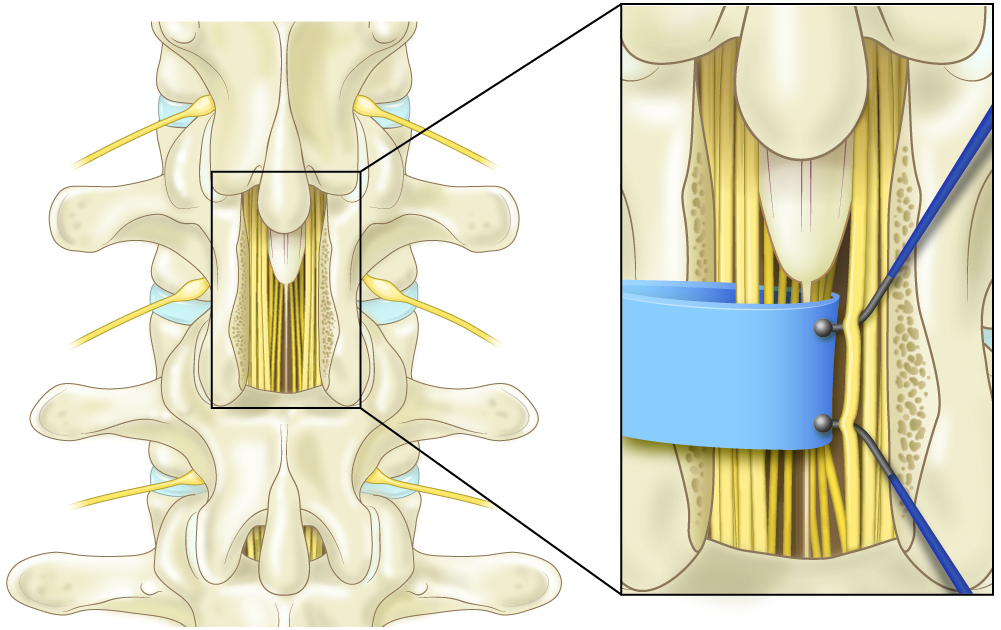
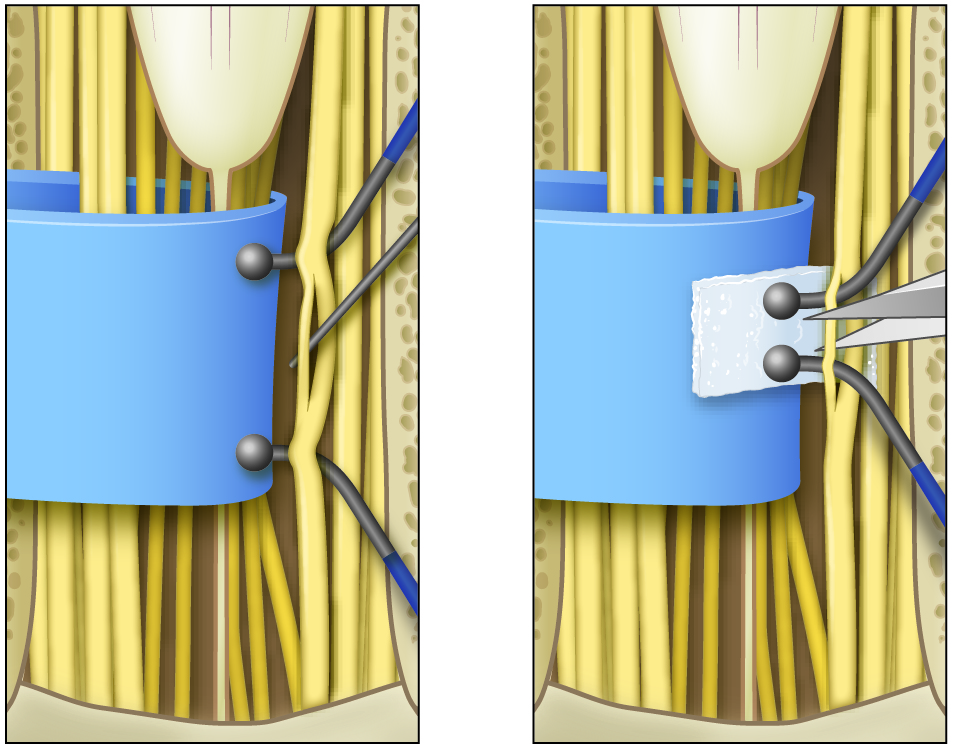
Once your child is asleep under general anesthesia, the neurosurgeon makes a small cut in the lower thoracic/upper lumbar region of the spine and removes a small section of bone to expose the nerve roots as they exit the spinal cord. Looking through a microscope, the surgeon then separates the nerve roots into groups, finding those that bring sensation (dorsal) and those that carry signals to the muscles (ventral).
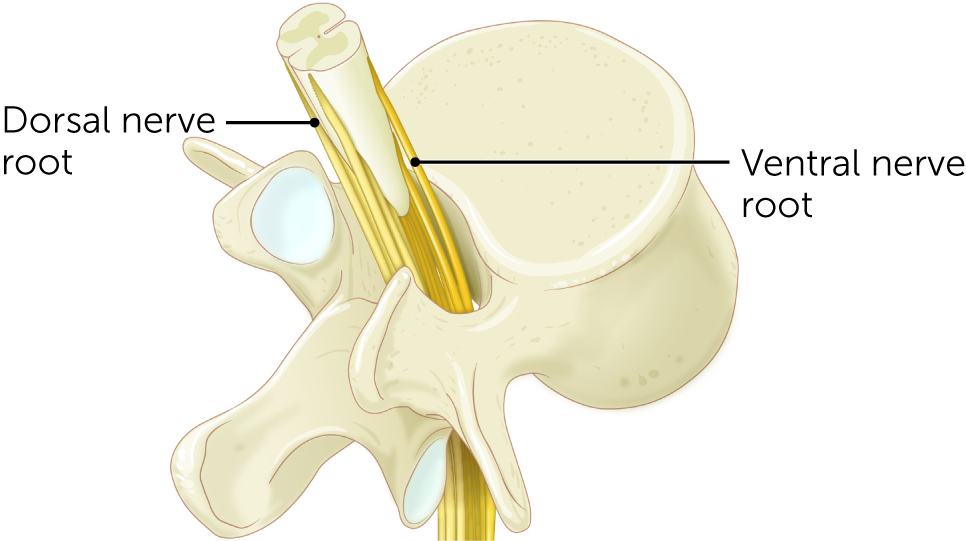
The surgeon tests each sensory nerve root by stimulating it electrically, while a specialist called an electrophysiologist monitors the response in your child’s leg muscles. If the nerve responses are abnormal, these nerve roots may be selectively cut. After the surgeon cuts about half of the abnormal nerve roots, they may also cut a limited amount of the ventral nerve roots. This allows us to treat severe spasticity and dystonia and is why the surgery is called “combined.” At the end of the surgery, the surgeon places a small temporary epidural catheter near the surgical site, so that we can control your child’s post-surgical pain in the hospital.
We will evaluate your child carefully to determine whether combined rhizotomy is the best treatment option. Children are most likely to benefit from the operation if they:
Combined rhizotomy may be less beneficial if most of your child’s tone is in their arms. Although it can sometimes improve arm tone, it is designed primarily to improve the legs.
Because combined rhizotomy relieves tone in the muscles, tone can decrease right away. We will keep your child in a flat position in bed for two days following surgery to help prevent spinal fluid from leaking. During this time, they will receive pain treatment to ensure they are as comfortable as possible. This includes medicine given through a temporary epidural catheter, which reduces the need for IV or oral opiate medications. The epidural catheter is removed after two to three days. Our physical therapy team and rehabilitation doctors will determine if your child needs rehabilitation while in the hospital.
Most children are in the hospital for about four to six days following the surgery, and receive care from a team of doctors from multiple specialties, including neurosurgery and our Care for Children with Medical Complexity program.
Selective dorsal rhizotomy is traditionally designed to help children with spastic diplegia who are able to walk with or without assistive devices. It can provide permanent improvement in spasticity.
However, selective dorsal rhizotomy can be less beneficial for children with tone making them unable to walk — many of whom have both spasticity and dystonia — because the dorsal roots cut during the surgery will not improve dystonia. When a traditional dorsal rhizotomy is combined with a ventral rhizotomy, we can treat the dystonia as well.
The goals of selective dorsal rhizotomy are different than combined rhizotomy. For selective dorsal rhizotomy, the goal is to allow children who are already walking to walk better with less tone. In combined rhizotomy, children already cannot walk, and the goal is instead to improve comfort, mobility, and transfers by decreasing the tone in the legs.
The goal of both is very similar: to improve tone by treating spasticity and dystonia, and to improve quality of life. However, a baclofen pump requires implantation of a large piece of metal hardware in the abdomen wall and tubing going into the spine. This device must be regularly refilled with a needle through the skin every few months and another surgery every six to seven years to put in a new pump. The pump can be continuously adjusted to achieve different amounts of effect.
In contrast, combined rhizotomy is a one-time surgery, which is permanent and does not require implantation of any hardware. It does not carry the same risk of infection, device malfunction (including catheter clogging or obstruction), and baclofen withdrawal, or overdose. For children who already have many complex medical problems, this can be a considerable advantage. Nevertheless, the baclofen pump can be a very helpful treatment option. We believe in a balanced approach to ensure your child has access to all options that could be helpful for them.