Treating congenital melanocytic nevus in infancy
Kim and Ryan noticed their son’s birthmark almost immediately after he was born — they knew his was different.


Congenital melanocytic nevi, or congenital moles, are pigmented skin lesions that are present at birth or develop within a child’s first year. These brown spots are caused by an overgrowth of melanocytes, the cells responsible for skin pigment.
Congenital nevi in children are quite common, occurring in approximately one in 100 to one in 200 births. While most congenital nevi are benign (non-cancerous) and harmless, larger nevi can carry certain risks, including:
Congenital nevi can vary in size and shape-from small, flat spots to large, raised areas. Their colors can range from light brown to dark grey, and they typically grow proportionally with the child.
It’s important to look for changes such as:
Congenital nevi are caused by an overgrowth of melanocytes. While the exact causes aren’t fully understood, they are believed to come from random genetic mutations that take place during fetal development. Nevi aren’t inherited, however some families have similar mole patterns.
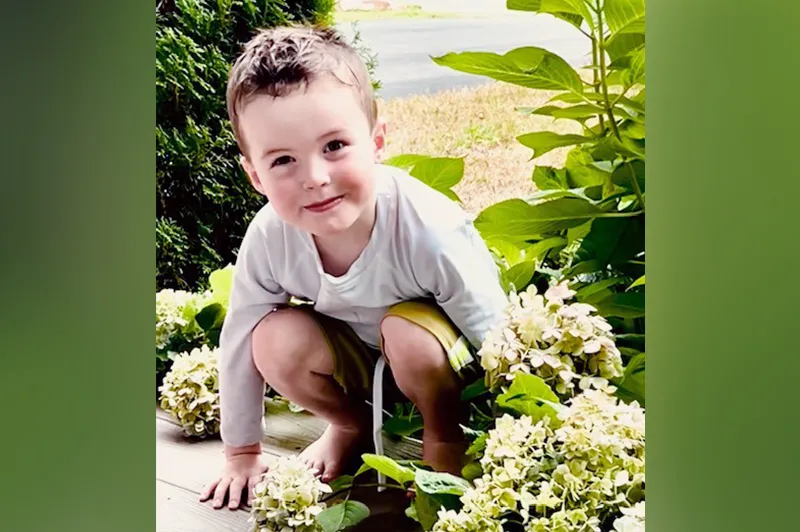
Kim and Ryan noticed their son’s birthmark almost immediately after he was born — they knew his was different.
At Boston Children’s Hospital, our Dermatology Program collaborates closely with the Department of Plastic and Oral Surgery to provide comprehensive care for congenital nevi in children. For patients with giant or high risk nevi, there may be involvement of the brain or spine, and patients may also be seen in the Department of Neurology.
Our expert team uses a variety of methods to diagnose these moles:
These comprehensive diagnostic steps allow our team to develop the best treatment options for your child.
At Boston Children’s, our approach to managing congenital nevi is tailored to each child’s unique needs, considering factors such as the mole’s size, location, and any noticeable changes.
We often recommend a watchful waiting approach for congenital nevi that show no signs of concerning change. We educate your child and your family on the natural changes that are expected as your child gets older, emphasizing the importance of regular check-ups to monitor any developments over time.
We may recommend surgical removal if a mole is large, growing, or showing concerning changes. We may also consider surgery if the mole is in a highly visible area. The removal of large moles and those occurring in young children is typically performed under anesthesia in an outpatient or day-procedure setting. Smaller moles can often be removed in a doctor’s office with numbing medication, especially once a child gets older. The removed tissue is sent for testing by the pathologist to evaluate for malignancy.
For giant congenital nevi and for relatively large nevi in cosmetically sensitive areas, we may consider several surgical options to achieve the best aesthetic outcome. These include:
Congenital nevi usually have a very favorable long-term outlook. However, regular check-ups and careful management are important.
At Boston Children’s, we offer comprehensive care for congenital nevi through a collaborative approach involving multiple specialties.
The Dermatology Program provides thorough evaluations and ongoing monitoring to assess your child’s mole and any potential changes. If surgery is needed, specialists from our Department of Plastic and Oral Surgery perform procedures focused on achieving both medical and cosmetic outcomes. Additionally, our Cancer and Blood Disorders Center offers expert consultation if there are concerns about the risk of melanoma or other skin cancers.
Based on the nevus and other risk factors, additional specialists such as neurologists, ophthalmologists, and endocrinologists may also be involved in your child’s care to create a personalized plan that prioritizes their health and well-being.
