Contact Us
Contact the Bone Marrow Failure and MDS Program
857-215-1312
Fax
617-751-7046
International
+1-617-355-5209


Pearson syndrome is a very rare condition that affects various parts of the body, in particular the bone marrow and the pancreas. Pearson syndrome also affects the cells in the bone marrow that produce white blood cells, red blood cells, and platelets, called hematopoietic stem cells.
Having too few red blood cells (anemia), white blood cells (neutropenia), or platelets (thrombocytopenia) can cause a child to feel weak and tired, frequently sick, easily bruise, and take a longer time to stop bleeding when injured.
Pearson syndrome is caused by a mutation — or changing of structure — in the mitochondrial DNA, which can make it difficult for the cells in your child’s body to make energy. Most reported cases happen for the first time in a family; it is not passed down from either parent.
Pearson syndrome also affects the pancreas. This can cause a variety of symptoms, including frequent diarrhea and stomach pain, difficulty gaining weight, as well as diabetes. Some children with Pearson syndrome may also have functional problems with their liver, kidneys, heart, eyes, ears, and brain.
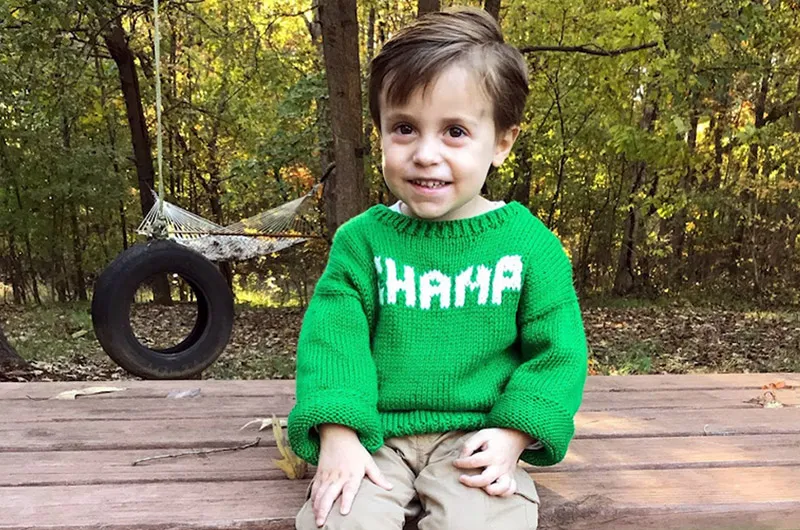
William's parents established a foundation to fuel research with Dr. Suneet Agarwal at the helm.
Many children with Pearson syndrome are (or become) anemic. This occurs when the iron, typically found in the hemoglobin, ends up instead in the mitochondria, the power generators of the cell. Without hemoglobin, these cells cannot carry oxygen.
When a person has too few white blood cells (neutropenia) it is more difficult for the body to fight infection, which can cause frequent colds and sickness. When there aren’t enough platelets (thrombocytopenia), the blood does not clot as well, which can cause a child to take a long time to stop bleeding. Some children with Pearson syndrome may have problems with blood cells, while others may not.
Pearson syndrome may also affect the pancreas, a gland found in the abdomen responsible for making digestive enzymes that break down the food we eat. The pancreas also produces hormones, which help control the sugar levels in our blood, known as insulin and glucagon.
Your child with Pearson syndrome may show symptoms of:
Some children with Person syndrome may also have problems with:
Pearson syndrome is caused by a problem within the DNA. While most DNA is nuclear — contained in the center of the body’s cells — there is a small portion of DNA contained in another part of the cell called the mitochondria. This section of DNA makes the energy by combining oxygen with the sugars and fats from food sources.
Pearson syndrome is usually caused by missing pieces — called deletions — of a part of the mitochondrial DNA. Changes in mitochondrial DNA make it hard for the cell to make energy.
Most cases of Pearson syndrome occur by mistake during the time when the egg or sperm were being made, also called de novo mutation. This means the disease was not passed down or inherited from either parent and no other family member has the disease.
Diagnosis of Pearson syndrome can be done via a bone marrow biopsy, urine test, or stool sample testing. Genetic testing can be also be performed to confirm the diagnosis.
In most cases, many children with Pearson syndrome die during infancy, though some children may survive into later childhood, but may go on to develop other disorders like Kearns-Sayre syndrome. Treatment options may include blood transfusions, pancreatic enzyme replacement therapy, and the treatment of infections.
Because it is so rare, many tests may be needed to diagnose Pearson syndrome. These include a bone marrow biopsy to uncover signs of sideroblastic anemia, or a stool sample to measure the amount of fat present in your child’s bowel movements. Your care team may also test the urine to check for certain organic acids which would be a sign of metabolic acidosis.
Genetic testing for changes or mutations in mitochondrial DNA would confirm the diagnosis for Pearson syndrome. Although it is usually caused by deletions of mitochondrial DNA, duplication of mitochondrial DNA can also cause symptoms of Pearson syndrome. Whether the condition is caused by a deletion or duplication of DNA may affect how the disease progresses.
Unfortunately, there is no cure for Pearson syndrome, and the goal of existing treatments is to decrease symptoms to improve quality of life. Children affected by Pearson syndrome may require frequent blood transfusions to help supply the body with healthy red blood cells.
It is vital that children who are affected by Pearson syndrome avoid other people who are sick with infections, since they cannot fight off illnesses as well as other children can. Additional treatments will depend on the specific symptoms; it may be necessary to see specialists for the liver, kidneys, heart, and pancreas. Physical or occupational therapy may be helpful, especially in children who live past infancy.
Because Pearson syndrome is a multisystem condition, a stem cell transplant can only correct the hematologic aspects of the disorder and cannot correct problems that occur in other parts of the body.
It is, however, important to ask your doctors about any new or promising treatments for Pearson syndrome.
The Bone Marrow Failure and Myelodysplastic Syndrome Program at Dana-Farber/Boston Children's Cancer and Blood Disorders Center provides comprehensive diagnostics, treatment, and preventive services for a wide range of blood disorders. Your child will receive care from some of the world’s most experienced hematologists with extensive expertise in caring for children with Pearson syndrome.
Dana-Farber/Boston Children's is collaborating with specialists across multiple institutions to improve diagnostics and drive research and future treatments for Pearson syndrome.