The key to preventing shin splints may be underfoot
Stronger foot muscles may reduce shin splints.


Shin splints, also known as medial tibial stress syndrome, are a common running injury caused by repetitive stress to the muscles, tendons, and tissues associated with the shin bone (tibia) over a period of time. If the lower leg doesn’t have enough rest between games or workouts, the shin can become painful and inflamed.
Runners and athletes whose sports involve cutting and side-to-side motions, such as basketball, are at risk of shin splints.
Shin splints can occur if a runner or athlete:
If an overuse injury like shin splints isn’t treated and the injury continues to worsen, a stress fracture can result. Complications after proper treatment for shin splints are uncommon but can include:
Our Sports Medicine specialists advise young athletes to:
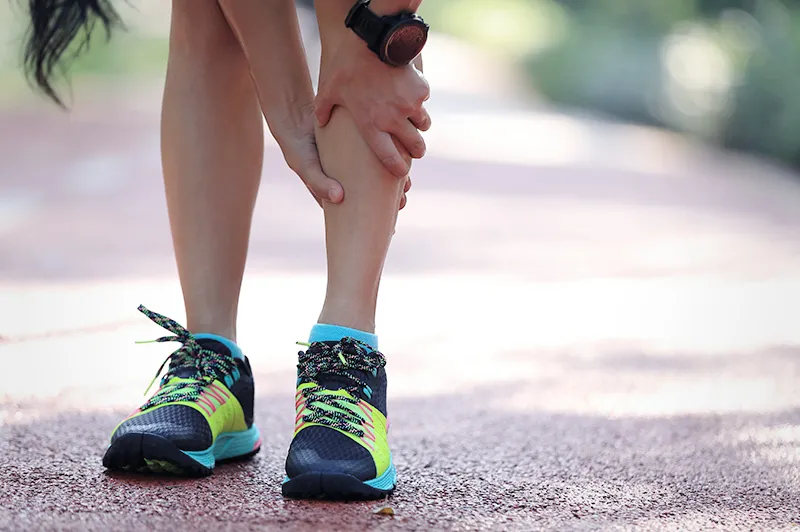
Stronger foot muscles may reduce shin splints.
Pain and/or inflammation at the side or front of the shin bone can be symptoms of shin splints. The pain tends to intensify in stages:
Your child’s orthopedic specialist will take a medical history and perform a physical exam. The doctor will also get X-rays to make sure there isn’t a true fracture. But because children can have stress fractures and damage to their growth plates that can’t be seen on X-rays, the clinician may use MRI (magnetic resonance imaging) and, rarely, a bone scan to get detailed images of the injury and verify that there is — or isn’t — a fracture.
Initial first aid for shin splints usually involves “R.I.C.E.” (rest, ice, compression, and elevation), as well as medications to help control pain and swelling:
The primary therapy for most cases of shin splints is simply to rest the injured leg — restricting all activities that involve using the leg for a period of weeks or months. Your child's doctor may also recommend a cast or walking boot in order to:
For an unusually severe injury, treatment options may include:
Most kids with shin splints can return to sports and regular activities after several weeks or months of rest and healing.
Parents and coaches should stress moderation in training and restrain the zeal with which they push young athletes.
Coaches themselves should learn and use proper training techniques, and avoid too many repetitive drills, since these are the overwhelming reason for overuse injuries. Coaches should also teach proper running mechanics and other sport-specific motion techniques.
Physical education departments should make sure that the surfaces of a track or field are in good shape, and that proper equipment, footwear, and protective gear are used for each sport.
As the largest and most experienced pediatric and young adult sports medicine practice in the country, the Sports Medicine Division at Boston Children's combines personalized care with innovative treatment for each athlete we treat.
Our Sports Medicine team consists of sports medicine physicians, orthopedic surgeons, physical therapists, podiatrists, athletic trainers, sports psychologists, dietitians, and many others who collaborate in every aspect of our patients’ care and their recovery.
Our Injured Runners Clinic is a partnership between Boston Children’s Sports Medicine Division and The Micheli Center for Sports Injury Prevention. Our clinicians and injury prevention specialists conduct a thorough physical and running gait evaluation for each patient to understand what factors contribute to their injury and how to correct them. We use cutting-edge technology, such as multiplanar video and force-plate treadmill analysis (a measurement of the impact of a runner’s foot against the ground), to gain a detailed understanding of the runner’s gait and possible problem areas.