Popular Search Terms


What is appendicitis?
Appendicitis is a painful swelling and infection of the appendix (a narrow, finger-like pouch that branches off the large intestine). Doctors are not really sure what the appendix does, but removing it is not harmful. Appendicitis is the most common cause of emergency surgery in childhood.
Appendicitis affects 1 in 1,000 people living in the U.S. Most cases of appendicitis occur between the ages of 10 and 30 years.
Since an infected appendix can rupture and be a life-threatening problem, call your health care provider or go to the emergency room immediately if your child has these symptoms:
- Sudden, pronounced pain around the belly button area
- In a short period of time, the pain moves to the lower right-hand part of the abdomen and your child may have a difficult time breathing
Why is appendicitis in children a concern?
An irritated appendix can rapidly turn into an infected and ruptured appendix, sometimes within hours. A ruptured appendix can be life-threatening. When the appendix ruptures, bacteria infect the organs inside the abdominal cavity, causing peritonitis. The bacterial infection can spread very quickly and be difficult to treat if diagnosis is delayed.
Symptoms & Causes
What are the symptoms of appendicitis in children?
The following are the most common symptoms of appendicitis in kids. However, each child may experience symptoms differently. Symptoms may include:
- Pain in the abdomen, which may start in the area around the belly button and move over to the lower right-hand side of the abdomen, but may also start in the lower right-hand side of the abdomen
- Usually increases in severity as time passes
- May be worse with moving, taking deep breaths, being touched, coughing, or sneezing
- May spread throughout the abdomen if the appendix ruptures
- Nausea and vomiting
- Loss of appetite
- Fever and chills
- Changes in behavior
- Diarrhea or constipation
What causes appendicitis in children?
Appendicitis occurs when the interior of the appendix becomes filled with something that causes it to swell, such as mucus, stool, or parasites. The appendix then becomes irritated and inflamed. The blood supply to the appendix is cut off as the swelling and irritation increase. Adequate blood flow is necessary for a body part to remain healthy. When the blood flow is reduced, the appendix starts to die. Rupture (or perforation) occurs as holes develop in the walls of the appendix, allowing stool, mucus, and other substances to leak through and get inside the abdomen. An infection inside the abdomen known as peritonitis occurs when the appendix perforates.
Diagnosis & Treatments
How is appendicitis diagnosed in children?
An appendicitis diagnosis for children will include a complete medical history and physical examination. It also may include:
- Abdominal ultrasound
- Computed tomography (CT scan)
Other appendicitis diagnostic tests for children may include:
- Blood tests: These tests are done to evaluate the infection, or to determine if there are any problems with other abdominal organs, such as the liver or pancreas.
- Urinalysis: This test detects any bladder or kidney infection, which may mimic the symptoms of appendicitis.
Symptoms of appendicitis may resemble other conditions or medical problems. Consult your health care provider for a diagnosis.
How is appendicitis in children treated?
Specific treatment for appendicitis will be determined by your child's health care provider based on the following:
- The extent of the problem
- Your child's age, overall health, and medical history
- The opinion of the surgeon and other health care providers involved in the child's care
- Your child's tolerance for specific medications, procedures, or therapies
- Expectations for the course of the problem
- Your opinion and preference
Because of the likelihood of an infected appendix rupturing and causing a severe, life-threatening infection, health care providers will often recommend that the appendix be removed with an operation.
What happens during appendix surgery for children?
The appendix may be removed in two ways:
- Open method. Under anesthesia, an incision is made in the lower right-hand side of the abdomen. The surgeon finds the appendix and removes it. If the appendix has ruptured, a small drainage tube may be placed to allow pus and other fluids that are in the abdomen to drain out. The tube will be removed in a few days, when the surgeon feels the abdominal infection has subsided.
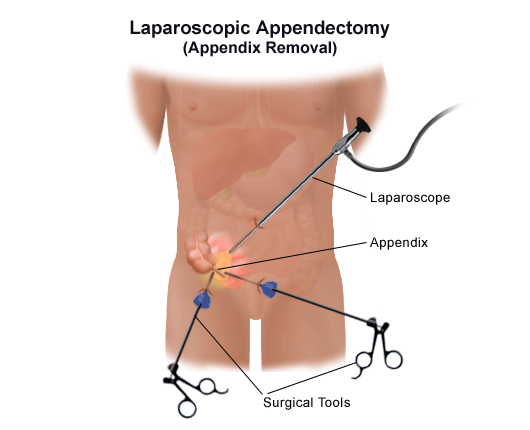
- Laparoscopic method. This procedure uses several small incisions and a camera called a laparoscope to look inside the abdomen during the operation. Under anesthesia, the instruments the surgeon uses to remove the appendix are placed through the small incisions, and the laparoscope is placed through another incision. This method is not usually performed if the appendix has ruptured.
After surgery, children are not allowed to eat or drink anything for a specified period of time so the intestine can heal. Fluids are given into the bloodstream through small plastic tubes called IVs until your child is allowed to begin drinking liquids. Your child will also receive antibiotics and medications through the IV to help her feel comfortable. Eventually, children will be allowed to drink clear liquids (such as water, sports drinks, or apple juice), and then gradually advance to solid foods.
Is immediate surgery always necessary if a child has appendicitis?
Health care providers may recommend non-operative treatment of a ruptured appendix if there is a contained abscess and the child is stable. In some cases in which the appendix has ruptured and formed a localized abscess, a health care provider may recommend that the appendix not be removed right away. Instead, your child may receive treatment with intravenous antibiotics given through an intravenous catheter (called a peripherally inserted central catheter or PICC line) for about 10 to 14 days. This may be done along with CT- or ultrasound-guided drainage of the abscess. This allows the infection and inflammatory process to resolve. Your child will then undergo an elective (planned) interval appendectomy six to eight weeks later.
A child whose appendix ruptured will have to stay in the hospital longer than the child whose appendix was removed before it ruptured. Some children will need to take antibiotics by mouth for a period of time specified by the health care provider after they go home.
What happens after my child leaves the hospital?
Your physician will generally recommend that your child not do any heavy lifting, play contact sports, or "rough-house" for several weeks after the operation.
If a drain is still in place when your child goes home, she should not take a tub bath or go swimming until the drain is removed. Your child may need to take antibiotics at home to help fight the infection in the abdomen. You will be given a prescription for pain medication for your child to take at home to help her feel comfortable. Some pain medications can make your child constipated, so ask your physician or pharmacist about any side effects the medication might have.
Moving around after surgery rather than lying in bed can help prevent constipation. Drinking fruit juices and eating fruits, whole grain cereals, and breads and vegetables after being advanced to solid foods can help with constipation as well. Most children who have their appendix removed will have no long-term problems.
How we care for appendicitis
Appendicitis can be an emergency situation. The Department of Surgery at Boston Children's Hospital has surgeons ready day and night to diagnose appendicitis and then remove your child's appendix, either before or after it has ruptured.
Appendicitis is the most common childhood surgical emergency, but the diagnosis can be challenging, especially in children, often leading to either unnecessary surgery in children without appendicitis, or a ruptured appendix and serious complications when the condition is missed.
Emergency medicine physicians and scientists at the Proteomics Center at Boston Children's have demonstrated that a protein detectable in urine might serve as a "biomarker" for appendicitis, potentially allowing diagnosis in a matter of minutes.
Practitioners Who Specialize In This Condition (6)

Catherine Chen, MD, MPH
Director, Trauma Center; Pediatric Surgeon, Department of Surgery
Assistant Professor of Surgery, Harvard Medical School


Farokh Demehri, MD
Pediatric Surgeon, Department of Surgery; Associate, Division of Critical Care Medicine
Assistant Professor of Surgery, Harvard Medical School
