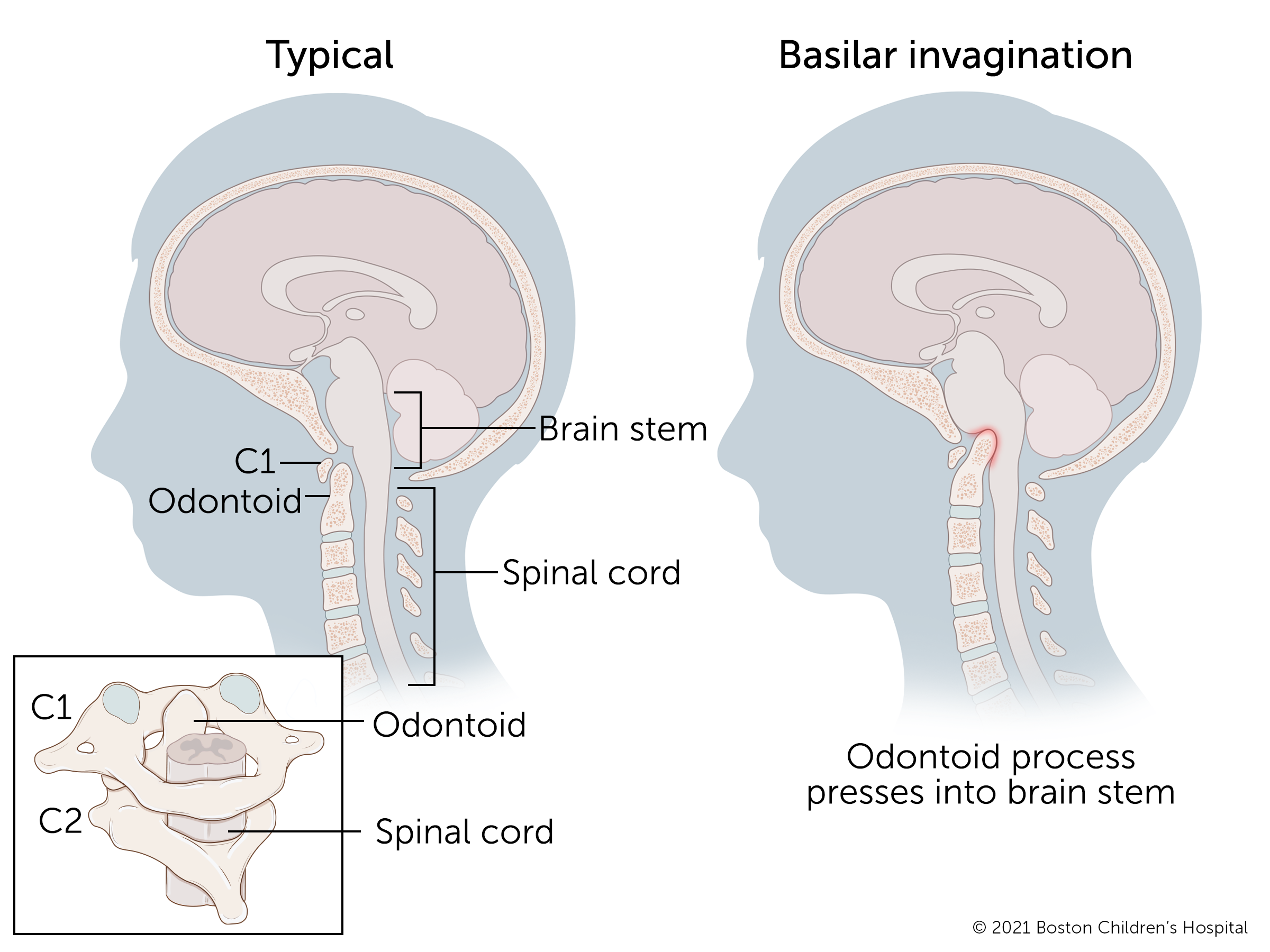
Treatment for basilar invagination depends on the severity of the condition.
Non-surgical treatment for basilar invagination
Children with mild basilar invagination can often be treated with physical therapy, anti-inflammatory medication, or a neck brace. However, basilar invagination may become more severe as children grow. Therefore, children with a mild form of the condition need to be followed by a spine specialist over time. The specialist will monitor their symptoms and watch for any changes in the alignment of their spine.
Surgical treatment for basilar invagination
Children with severe basilar invagination will probably need surgery to relieve pressure on their brain stem and stabilize their cervical spine. Because surgery involves a child’s spine, brain, and spinal cord, it’s important that the surgical team includes experts in both orthopedic surgery and neurosurgery.
Surgical treatment for basilar invagination involves realigning the spine and decompressing any pressure against the brain stem. The cervical spine will then be stabilized with spinal fusion.