Unfortunately, there is currently no vaccine for Lyme disease. But you can avoid Lyme disease by avoiding tick bites, checking for ticks, and removing ticks promptly, before they become lodged in the skin. Some tips:
Avoid tick “playgrounds”: Ticks like low-level shrubs and grasses, particularly at the edges of wooded areas. If you’re hiking, try to stay in the center of the trail and avoid bushwhacking. Walk on cleared paths or pavement through wooded areas and fields when possible.
Dress appropriately: Long pants with legs tucked into socks and closed-toed shoes will help keep ticks away from skin. Light-colored clothing helps make ticks visible.
Insect repellant: Products that contain DEET repel ticks but do not kill them and are not 100 percent effective. Use a brand of insect repellent that is designated as child-safe if your child is 1 year or older. For infants, check with your pediatrician about what brands are safe to use. You can also treat clothing with a product that contains permethrin, which is known to kill ticks on contact.
Shower after outdoor activities are done for the day. It may take four to six hours for ticks to attach firmly to skin. Showering will help remove unattached ticks.
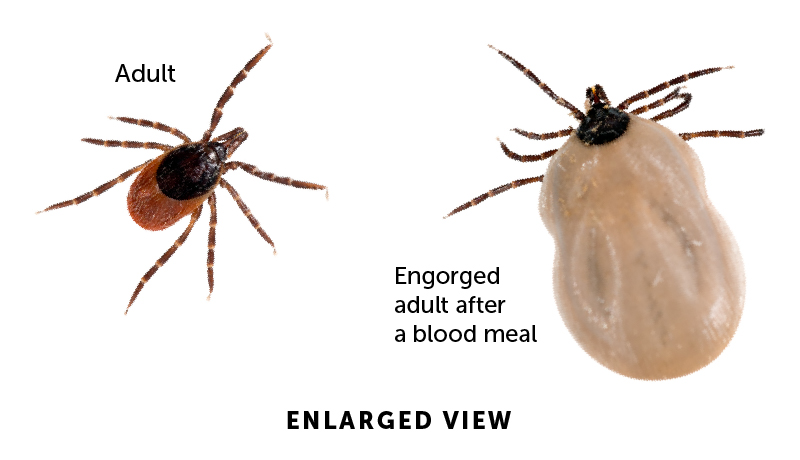
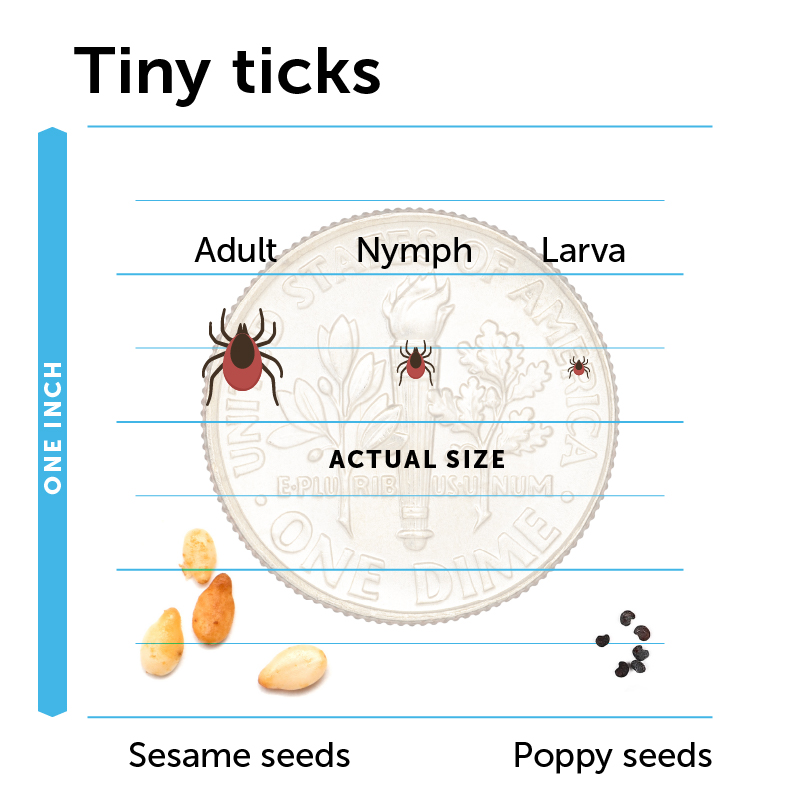
Check yourself and your family frequently for ticks, especially if you’re in an area where the ticks are common — even if you’ve only been out in your yard. Black-legged ticks can be extremely tiny, measuring less than one millimeter across, so make sure you search your child’s clothing and body very thoroughly. You or your child should perform one thorough tick check per day. Visually inspect all areas of the body including:
- All parts of the body that bend: behind the knees, between fingers and toes, underarms and groin
- Other areas where ticks are commonly found: belly button, in and behind the ears, neck, hairline, and top of the head
- Anywhere clothing presses on the skin