Popular Search Terms
Research and Innovation
The Division of Genetics and Genomics at Boston Children’s Hospital has discovery and innovation built into its DNA. Our clinical genetics team and research laboratories work closely together to find the underlying causes of genetic disorders and to use this knowledge to provide better care and counseling.
Image
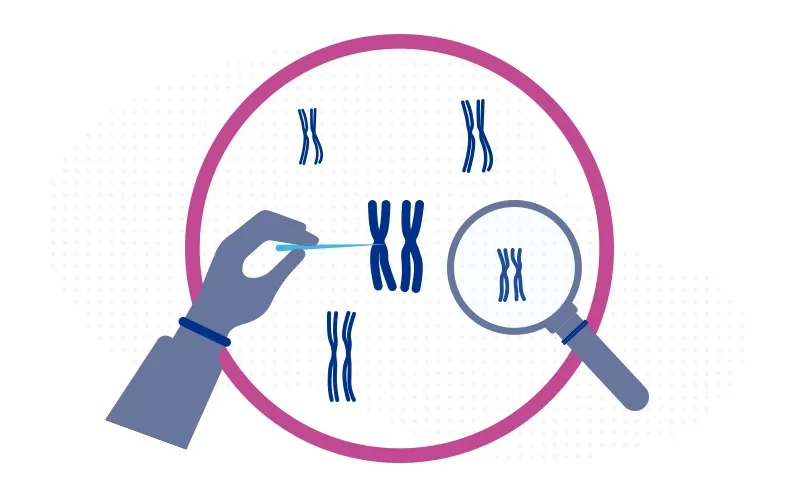
Rapid technological advances in genetics and genomics are allowing our researchers to find extremely subtle mutations affecting just small a fraction of the body’s cells; unusual, one-of-a-kind mutations; and mutations in the genome’s “dark matter” — genetic code that regulates the expression of other genes. Tools we use include:
- Whole-genome and whole-exome sequencing
- High-coverage sequencing
- RNA sequencing
- Single-cell DNA and RNA sequencing
- Genome-wide association studies (GWAS)
- Chromosomal microarray analysis
- Genetic screening using CRISPR/Cas9 gene editing
- Gene expression studies
Bioinformatics expertise, tissue banks, stem cell models, and animal models all contribute to a fast pace of discovery. We often collaborate with academic partners and with industry on clinical and preclinical investigations.
We often collaborate with academic partners and with industry on clinical and preclinical investigations. These advances are helping us solve patients’ diagnostic mysteries, We often collaborate with academic partners and with industry on clinical and preclinical investigations. These advances are helping us solve patients’ diagnostic mysteries, understand disease biology and find new treatments — sometimes ones that wouldn’t otherwise be considered. Today, it’s truly possible to go from genetic discovery to clinical trial within a decade. Our team is investigating a variety of genetic therapies. Our many initiatives include sequencing the genomes of newborns; pharmacogenomics, using genetic to better choose medications; and in-depth studies on rare conditions in our Manton Center for Orphan Disease Research. We are also proud to be part of the National Institutes of Health's Undiagnosed Diseases Network as part of the Harvard Clinical Site.
I want to help further genetic research. How can I participate?
Families can help advance genetic discovery too! Ask your geneticist or genetic counselor if there are any studies that you or your child might be eligible to join. Additionally, thousands of patients have chosen to join our Biobank for Health Discovery, donating their blood, cells, and tissues to science.