Christelle Moufawad El Achkar, MD
Neurologist, Department of Neurology
Instructor of Neurology, Harvard Medical School
Image
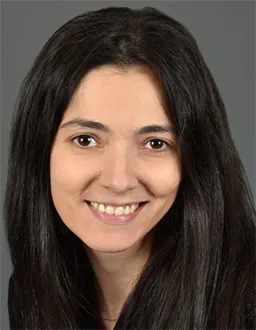
Christelle Moufawad El Achkar, MD
Neurologist, Department of Neurology
Instructor of Neurology, Harvard Medical School
Medical Services
Languages
English
Education
Medical School
American University of Beirut
2008
Riad El Solh
Beirut
Internship
Rainbow Babies & Children's Hospital
2011
Cleveland
OH
Residency
Boston Children's Hospital
2014
Boston
MA
Fellowship
Boston Children's Hospital
2016
Boston
MA
Certifications
American Board of Psychiatry and Neurology (Child and Adolescent Neurology)
American Board of Psychiatry and Neurology (Epilepsy)
Publications
Utility of Exome Sequencing for Diagnosis in Unexplained Pediatric-Onset Epilepsy. View Abstract
Clinical Characteristics of Seizures and Epilepsy in Individuals With Recurrent Deletions and Duplications in the 16p11.2 Region. View Abstract
Human ARHGEF9 intellectual disability syndrome is phenocopied by a mutation that disrupts collybistin binding to the GABAA receptor a2 subunit. View Abstract
Human ARHGEF9 intellectual disability syndrome is phenocopied by a mutation that disrupts collybistin binding to the GABAA receptor a2 subunit. View Abstract
De novo TRIM8 variants impair its protein localization to nuclear bodies and cause developmental delay, epilepsy, and focal segmental glomerulosclerosis. View Abstract
Characterization of the GABRB2-Associated Neurodevelopmental Disorders. View Abstract
Polymicrogyria is Associated With Pathogenic Variants in PTEN. View Abstract
Genetic diagnoses in epilepsy: The impact of dynamic exome analysis in a pediatric cohort. View Abstract
Clinical Reasoning: A 6-week-old infant with migrating focal seizures. View Abstract
Patient-Customized Oligonucleotide Therapy for a Rare Genetic Disease. View Abstract
Heterogeneous clinical and functional features of GRIN2D-related developmental and epileptic encephalopathy. View Abstract
Recurrent SLC1A2 variants cause epilepsy via a dominant negative mechanism. View Abstract
De Novo Pathogenic Variants in CACNA1E Cause Developmental and Epileptic Encephalopathy with Contractures, Macrocephaly, and Dyskinesias. View Abstract
De Novo Pathogenic Variants in CACNA1E Cause Developmental and Epileptic Encephalopathy with Contractures, Macrocephaly, and Dyskinesias. View Abstract
A Recurrent De Novo PACS2 Heterozygous Missense Variant Causes Neonatal-Onset Developmental Epileptic Encephalopathy, Facial Dysmorphism, and Cerebellar Dysgenesis. View Abstract
A Recurrent De Novo PACS2 Heterozygous Missense Variant Causes Neonatal-Onset Developmental Epileptic Encephalopathy, Facial Dysmorphism, and Cerebellar Dysgenesis. View Abstract
PCDH19-related epilepsy is associated with a broad neurodevelopmental spectrum. View Abstract
Characterization of a novel variant in siblings with Asparagine Synthetase Deficiency. View Abstract
Compound heterozygosity with PRRT2: Pushing the phenotypic envelope in genetic epilepsies. View Abstract
A Model Program for Translational Medicine in Epilepsy Genetics. View Abstract
De Novo TUBB2A Variant Presenting With Anterior Temporal Pachygyria. View Abstract
SCN2A-Related Early-Onset Epileptic Encephalopathy Responsive to Phenobarbital. View Abstract
The genetics of the epilepsies. View Abstract
Clinical characteristics of children and young adults with co-occurring autism spectrum disorder and epilepsy. View Abstract
Genetic and phenotypic diversity of NHE6 mutations in Christianson syndrome. View Abstract
PRRT2-Associated Paroxysmal Movement Disorders View Abstract
Locations