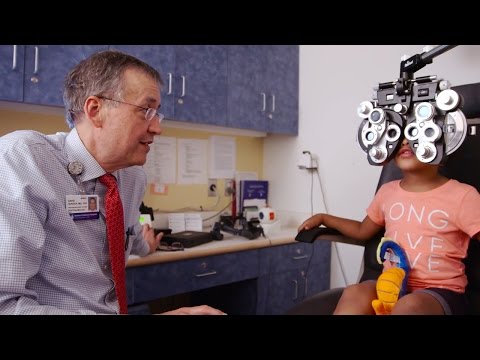
David Hunter, MD, PhD

Ophthalmologist-in-Chief; Richard Robb Chair in Ophthalmology
Professor and Vice Chair, Harvard Medical School

Medical Services

Languages
English
Education
Undergraduate School
Rice University
1979
Houston
TX
Graduate School
PhD
Baylor College of Medicine
1984
Houston
TX
Medical School
Baylor College of Medicine
1987
Houston
TX
Internship
Transitional
Framingham Union Hospital
1988
Framingham
MA
Residency
Ophthalmology
Massachusetts Eye and Ear Infirmary / Harvard Medical School
1991
Boston
MA
Fellowship
Pediatric Ophthalmology and Strabismus
The Wilmer Ophthalmological Institute, Johns Hopkins University
1992
Baltimore
MD
Media
Caregiver Profile

Meet Dr. David Hunter

Certifications
American Board of Ophthalmology (General)
Professional History

David G. Hunter, MD, PhD is Ophthalmologist-in-Chief and the Richard M. Robb Chair of Ophthalmology at Boston Children’s Hospital, President of the Children’s Hospital Ophthalmology Foundation, and Professor and Vice Chair of Ophthalmology at Harvard Medical School. Dr. Hunter obtained a Bachelor of Science in electrical engineering from Rice University and an MD and PhD (in Cell Biology) from Baylor College of Medicine. He completed an ophthalmology residency at Harvard/Mass Eye & Ear and a fellowship in pediatric ophthalmology at Johns Hopkins/Wilmer Ophthalmological Institute. He is now Ophthalmologist-in-Chief in the Department of Ophthalmology at Boston Children’s Hospital, which has grown to become the largest pediatric ophthalmology department in the nation and perhaps the world, with more than 40 faculty members including pediatric subspecialists in nearly every aspect of ophthalmology as well as basic research faculty studying the visual system in health and disease.

Dr. Hunter’s clinical and research interests revolve around the diagnosis and treatment of amblyopia and strabismus. In addition to numerous peer-reviewed publications, he is co-author of the books Learning Strabismus Surgery: A Case-Based Approach and Last-Minute Optics (now in its third edition), and his lecture series on optics and refraction is available free of charge on YouTube for ophthalmologists-in-training around the world. He is past Editor-in-Chief of the Journal of the American Association for Pediatric Ophthalmology and Strabismus and past Vice President of the Association for Research in Vision and Ophthalmology (ARVO). He is currently President of AAPOS, Fellow of the American Academy of Ophthalmology, Gold Fellow of ARVO, and Senior Fellow of the Institute of Electrical and Electronics Engineers. Named by the Boston Globe as one of Massachusetts’ 12 Top Innovators, Dr. Hunter is also co-founder and board member of Rebion, Inc., manufacturer of the Blinq vision screening device.


Approach to Care
Having trained as an engineer before going to medical school, I realized that the more we learn about how something works, the better we are able to fix it. As a doctor and surgeon, I try to use those same principles, taking each case as unique, trying to understand as much as possible the nature of the problem before setting out to try to correct it. That approach can, in some cases, lead to entirely new treatments. But I’ve also learned that listening and educating is as much a part of being a doctor as any sort of medicine or surgery. Not every condition can be cured, but if I can at least transmit my understanding of the diagnosis and of what to expect in the future, then the healing can begin.

Publications

Gene Identification for Ocular Congenital Cranial Motor Neuron Disorders Using Human Sequencing, Zebrafish Screening, and Protein Binding Microarrays. View Abstract
Sociodemographic Disparities in Uncorrectable Visual Impairment Among US Adolescents. View Abstract
Differential Impacts of Strabismic and Anisometropic Amblyopia on the Mesoscale Functional Organization of the Human Visual Cortex. View Abstract
Three-year Outcomes of Botulinum Toxin Versus Strabismus Surgery for the Treatment of Acute Acquired Comitant Esotropia in Children. View Abstract
Cost-effectiveness Analysis of Digital Therapeutics for Amblyopia. View Abstract
Acquired torticollis due to an ocular surface foreign body. View Abstract
Trends in Billing Secure Messages at Ophthalmology Practices across the United States. View Abstract
Using machine learning to identify pediatric ophthalmologists. View Abstract
Race, Ethnicity, and Sex in Pediatric Eye Disease Investigator Group Clinical Studies. View Abstract
Intravenous fluorescein overdose in a child undergoing fluorescein angiography. View Abstract
Gene identification for ocular congenital cranial motor neuron disorders using human sequencing, zebrafish screening, and protein binding microarrays. View Abstract
Impact of Pediatric Instrument-Based Vision Screening. View Abstract
Challenges in management of congenital enophthalmos due to anomalous accessory orbital extraocular muscle bands. View Abstract
Expanding the genetics and phenotypes of ocular congenital cranial dysinnervation disorders. View Abstract
Refractive errors in patients with Bardet Biedl syndrome. View Abstract
Vision Screening in Children-Reply. View Abstract
Ocular lichen planus as a cause of recurrent restrictive strabismus. View Abstract
The Association of Race, Ethnicity, and Insurance Status with the Visual Acuity of Retinoblastoma Survivors in the IRIS® Registry. View Abstract
Peripheral Binocular Imbalance in Anisometropic and Strabismic Amblyopia. View Abstract
Risk of abducens nerve palsy following COVID-19 vaccination. View Abstract
A Comparison of Chemodnervation to Incisional Surgery for Acute, Acquired, Comitant Esotropia: An International Study. View Abstract
Presence of Copy Number Variants Associated With Esotropia in Patients With Exotropia. View Abstract
Gaps in the Vision Screening Pathway for School-Aged US Children. View Abstract
The Incidence of Strabismus After Upper and Lower Blepharoplasty in the United States. View Abstract
In vivo quasi-elastic light scattering detects molecular changes in the lenses of adolescents with Down syndrome. View Abstract
Factors associated with the use of botulinum toxin injections for adult strabismus in the IRIS Registry. View Abstract
Surgical Approach and Reoperation Risk in Intermittent Exotropia in the IRIS Registry. View Abstract
Correlation of Strabismus Surgical Outcomes Graded by Goal-Determined Metric With Patient Satisfaction Survey. View Abstract
Richard Moore Robb, MD. View Abstract
Vision Testing for Adolescents in the US. View Abstract
Amblyopia treatment outcomes in patients with neurodevelopmental disorders. View Abstract
Vision Screening Among Children With Private Insurance: 2010-2019. View Abstract
The impact of the COVID-19 pandemic on the surgical volume of pediatric ophthalmology and strabismus fellows. View Abstract
Use and Costs of Instrument-Based Vision Screening for US Children Aged 12 to 36 Months. View Abstract
Improving Estimates of the Geographic Distribution of Pediatric Ophthalmologists to Identify Underserved Regions. View Abstract
Durable recovery from amblyopia with donepezil. View Abstract
The prevalence and recurrence risk of bare sclera pterygium surgery in the United States. View Abstract
Comment on "The blinqTM Vision Screener in Detection of Amblyopia and Strabismus". View Abstract
Factors Associated With Nasolacrimal Duct Probing Failure Among Children in the Intelligent Research in Sight Registry. View Abstract
Detection of visuomotor dysfunction in mild traumatic brain injury using binocular retinal polarization scanning. View Abstract
Smoking Is Associated With a Higher Risk of Surgical Intervention for Thyroid Eye Disease in the IRIS Registry. View Abstract
Strategies for managing strabismus from oculomotor nerve palsy. View Abstract
Association of Neighborhood Child Opportunity Index with presenting visual acuity in amblyopic children. View Abstract
Strabismus Surgery in Orthophoric Patients With Symptomatic, Asymmetric Vertical or Horizontal Incomitance. View Abstract
Letter to editor: Botulinum toxin-augmented surgery - another option for large-angle esodeviations. View Abstract
Subthreshold Amblyopia: Characterization of a New Cohort. View Abstract
The Impact of Strabismus on Psychosocial Equity. View Abstract
Extraocular muscle ductions following nasal transposition of the split lateral rectus muscle. View Abstract
Risk Factors Associated With Pterygium Reoperation in the IRIS Registry. View Abstract
A decline in the strabismus surgical experience of ophthalmology residents in the United States from 2010 to 2019. View Abstract
Carbon footprint of the 2021 and 2022 AAPOS annual meetings. View Abstract
Nasal Transposition of the Split Lateral Rectus Muscle for Strabismus Associated With Bilateral 3rd-Nerve Palsy. View Abstract
Adjustable Suture Technique Is Associated with Fewer Strabismus Reoperations in the Intelligent Research in Sight Registry. View Abstract
Comparison of fellowship match opportunities and results across pediatric surgical subspecialities. View Abstract
Chorioretinal Scars From Scleral Perforation During Prior Strabismus Surgery. View Abstract
AAPOS uniform guidelines for instrument-based pediatric vision screen validation 2021. View Abstract
Recessive variants in COL25A1 gene as novel cause of arthrogryposis multiplex congenita with ocular congenital cranial dysinnervation disorder. View Abstract
Impact of Adding Augmented Superior Rectus Transpositions to Medial Rectus Muscle Recessions When Treating Esotropic Moebius Syndrome. View Abstract
TUBB3 Arg262His causes a recognizable syndrome including CFEOM3, facial palsy, joint contractures, and early-onset peripheral neuropathy. View Abstract
Trends in Venture Capital Investments in Ophthalmology Companies (2011-2021). View Abstract
Randomized Controlled Trial of a Dichoptic Digital Therapeutic for Amblyopia. View Abstract
Effect of Sequential and Simultaneous Patching Regimens in Unilateral Amblyopia. View Abstract
Botulinum Toxin Injection of the Inferior Oblique Muscles for V-Pattern Strabismus and Primary Position Hypertropia. View Abstract
Evaluation of the blinq vision scanner for detection of amblyopia and strabismus. View Abstract
Virtual reality prototype for binocular therapy in older children and adults with amblyopia. View Abstract
Identifying Characteristics Predictive of Lost-to-Follow-Up Status in Amblyopia. View Abstract
Making change at Journal of AAPOS: looking back and moving forward. View Abstract
Digital therapeutic improves visual acuity and encourages high adherence in amblyopic children in open-label pilot study. View Abstract
Drive-by Photoscreening [Letter]. View Abstract
Emerging therapies for amblyopia. View Abstract
Novel variants in TUBA1A cause congenital fibrosis of the extraocular muscles with or without malformations of cortical brain development. View Abstract
Use of Botulinum Toxin in Ophthalmology. View Abstract
Incidence of symptomatic vertical and torsional diplopia after superior rectus transposition for esotropic Duane syndrome and abducens nerve palsy. View Abstract
In Vivo Quasi-Elastic Light Scattering Eye Scanner Detects Molecular Aging in Humans. View Abstract
Validation of the Birefringent Amblyopia Screener (Retinal Polarization Scanner), the Rebion Blinq.™ [Letter]. View Abstract
Self-grading effect of inferior oblique myectomy and recession. View Abstract
Recurrent Rare Copy Number Variants Increase Risk for Esotropia. View Abstract
Improved adherence and treatment outcomes with an engaging, personalized digital therapeutic in amblyopia. View Abstract
Virtual Visits in Ophthalmology: Timely Advice for Implementation During the COVID-19 Public Health Crisis. View Abstract
Evaluating Amblyopia Treatment Success Using the American Academy of Ophthalmology IRIS50 Measures. View Abstract
Severe reverse amblyopia with atropine penalization. View Abstract
Effect of Primary Occlusion Therapy in Asymmetric, Bilateral Amblyopia. View Abstract
Anomalous superior oblique muscles and tendons in congenital fibrosis of the extraocular muscles. View Abstract
Outcomes of strabismus surgery in genetically confirmed congenital fibrosis of the extraocular muscles. View Abstract
Accurately Assessing Visual Deficits in Children With Developmental Dyslexia-Reply. View Abstract
The Role of Botulinum Toxin in the Treatment of Strabismus. View Abstract
Validation of StrabisPIX, a Mobile Application for Home Measurement of Ocular Alignment. View Abstract
Self-reported visual symptoms in children with developmental dyslexia. View Abstract
Transposition procedures in Duane retraction syndrome. View Abstract
Frequency of Visual Deficits in Children With Developmental Dyslexia. View Abstract
Improving Access-but Not Outcomes-With Iris Optical Coherence Tomography Angiography. View Abstract
Anomalous Vertical Deviations in Attempted Abduction Occur in the Majority of Patients With Esotropic Duane Syndrome. View Abstract
Genome-Wide Association Study Identifies a Susceptibility Locus for Comitant Esotropia and Suggests a Parent-of-Origin Effect. View Abstract
Public Health Burden and Potential Interventions for Myopia. View Abstract
Lens regeneration in children. View Abstract
Congenital muscular dystrophy-dystroglycanopathy, type A, featuring bilateral retinal dysplasia and vertical angle kappa. View Abstract
The Effect of Botulinum Toxin Augmentation on Strabismus Surgery for Large-Angle Infantile Esotropia. View Abstract
Long-term Surgical Outcomes for Large-angle Infantile Esotropia. View Abstract
Infantile and Early Acquired Ophthalmoplegic Syndromes. View Abstract
Superior oblique myokymia treated with levobunolol. View Abstract
Diplopia after Strabismus Surgery. View Abstract
Superior oblique myokymia. View Abstract
Central serous chorioretinopathy following medial transposition of split lateral rectus muscle for complete oculomotor nerve palsy. View Abstract
Reduced surgical success rate of rectus muscle plication compared to resection. View Abstract
Sedated suture adjustment in children undergoing adjustable suture strabismus surgery. View Abstract
Comparison of Botulinum Toxin With Surgery for the Treatment of Acute-Onset Comitant Esotropia in Children. View Abstract
Advances in Amblyopia Treatment: Paradigm Shifts and Future Directions. View Abstract
Duane syndrome with prominent oculo-auricular phenomenon. View Abstract
Evaluation of the Risk of Postoperative Infection in Adjustable Suture Strabismus Surgery. View Abstract
Loss of MAFB Function in Humans and Mice Causes Duane Syndrome, Aberrant Extraocular Muscle Innervation, and Inner-Ear Defects. View Abstract
Bifocals Fail to Improve Stereopsis Outcomes in High AC/A Accommodative Esotropia. View Abstract
Two unique TUBB3 mutations cause both CFEOM3 and malformations of cortical development. View Abstract
Changes in Lateral Comitance After Asymmetric Horizontal Strabismus Surgery. View Abstract
Treatment of amblyopia: the "eye pad," or the iPad? View Abstract
Surgical management of strabismus in Duane retraction syndrome. View Abstract
Scleral perforations during routine traction test in a patient with osteogenesis imperfecta. View Abstract
Complications of strabismus surgery: incidence and risk factors. View Abstract
Adjustable nasal transposition of split lateral rectus muscle for third nerve palsy. View Abstract
Assessing binocular interaction in amblyopia and its clinical feasibility. View Abstract
Superior rectus transposition vs medial rectus recession for treatment of esotropic Duane syndrome. View Abstract
Adjustable sutures in children. View Abstract
Goal-determined metrics to assess outcomes of esotropia surgery. View Abstract
Displacement of optical centers in over-the-counter readers: a potential cause of diplopia. View Abstract
Diagnostic distinctions and genetic analysis of patients diagnosed with moebius syndrome. View Abstract
Accuracy of vision screening. View Abstract
The genetic basis of incomitant strabismus: consolidation of the current knowledge of the genetic foundations of disease. View Abstract
Intentional extreme anisometropic pseudophakic monovision. View Abstract
A novel syndrome caused by the E410K amino acid substitution in the neuronal ß-tubulin isotype 3. View Abstract
Targeting treatable disease--not just risk factors--in pediatric vision screening. View Abstract
HOXB1 founder mutation in humans recapitulates the phenotype of Hoxb1-/- mice. View Abstract
Extraocular muscles in patients with infantile nystagmus: adaptations at the effector level. View Abstract
Superior rectus transposition and medial rectus recession for Duane syndrome and sixth nerve palsy. View Abstract
Expansion of the CHN1 strabismus phenotype. View Abstract
Isolated bilateral fourth cranial nerve palsies as the presenting sign of hydrocephalus. View Abstract
Adjustable suture strabismus surgery. View Abstract
Rapid, high-accuracy detection of strabismus and amblyopia using the pediatric vision scanner. View Abstract
Case reports, reviews, and changes to the Journal of AAPOS. View Abstract
The clinical and molecular genetic features of idiopathic infantile periodic alternating nystagmus. View Abstract
Alzheimer's disease amyloid-beta links lens and brain pathology in Down syndrome. View Abstract
Introducing AAPOS Workshops. View Abstract
Human TUBB3 mutations perturb microtubule dynamics, kinesin interactions, and axon guidance. View Abstract
Do we need evidence for everything? View Abstract
Short tag noose technique for optional and late suture adjustment in strabismus surgery. View Abstract
Preventing corneal abrasions in critically ill children receiving neuromuscular blockade: a randomized, controlled trial. View Abstract
Central fusion disruption following irradiation of neoplasms in the pineal region. View Abstract
Long-term results of an intraoperative adjustable superior oblique tendon suture spacer using nonabsorbable suture for Brown Syndrome. View Abstract
Pediatric Graves' ophthalmopathy: the pre- and postpubertal experience. View Abstract
Congenital fibrosis of the extraocular muscles. View Abstract
Three novel mutations in KIF21A highlight the importance of the third coiled-coil stalk domain in the etiology of CFEOM1. View Abstract
Patterns of eye care use and expenditures among children with diagnosed eye conditions. View Abstract
The assessment and management of chronic hamstring/posterior thigh pain. View Abstract
Directional eye fixation sensor using birefringence-based foveal detection. View Abstract
Mutations in FRMD7, a newly identified member of the FERM family, cause X-linked idiopathic congenital nystagmus. View Abstract
Prevalence and correlates of children's diagnosed eye and vision conditions. View Abstract
Birefringence-based eye fixation monitor with no moving parts. View Abstract
The Pediatric Vision Screener III: detection of strabismus in children. View Abstract
Amblyopia: diagnostic and therapeutic options. View Abstract
A novel KIF21A mutation in a patient with congenital fibrosis of the extraocular muscles and Marcus Gunn jaw-winking phenomenon. View Abstract
Early detection vs late treatment of amblyopia. View Abstract
Rapid, objective detection of cataract-induced blur using a bull's eye photodetector. View Abstract
Treatment of amblyopia in older children. View Abstract
Pediatric Vision Screener 1: instrument design and operation. View Abstract
Pediatric Vision Screener 2: pilot study in adults. View Abstract
Automated detection of ocular focus. View Abstract
Automated detection of ocular alignment with binocular retinal birefringence scanning. View Abstract
No colobomas in "renal coloboma" syndrome. View Abstract
Papillorenal syndrome in a Brazilian family. View Abstract
Papillorenal ("renal coloboma") syndrome. View Abstract
Long-term outcome of uncomplicated infantile exotropia. View Abstract
Diplopia after limited macular translocation surgery. View Abstract
Dynamic retinoscopy: the missing data. View Abstract
Superior oblique overaction from local anesthesia for cataract surgery. View Abstract
Multifocal intraocular lenses in children. View Abstract
An adjustable superior oblique tendon spacer with the use of nonabsorbable suture. View Abstract
Redefining papillorenal syndrome: an underdiagnosed cause of ocular and renal morbidity. View Abstract
Grand rounds #63: a case of a bilateral gaze limitation with diplopia for reading after two surgical procedures to treat a right medical rectus muscle paresis. View Abstract
Investigation into the relationship between the passive flexibility and active stiffness of the ankle plantar-flexor muscles. View Abstract
A proposed simple method for measurement in the anterior chamber angle: biometric gonioscopy. View Abstract
Prevalence of systemic and ocular disease in infantile exotropia: comparison with infantile esotropia. View Abstract
Mathematical modeling of retinal birefringence scanning. View Abstract
Automated detection of foveal fixation by use of retinal birefringence scanning. View Abstract
A randomized comparison study of drop versus spray topical cycloplegic application. View Abstract
Familial exudative vitreoretinopathy associated with monocular axial myopia. View Abstract
Vertical location of the corneal light reflex in strabismus photography. View Abstract
Automated analysis of electromyographic (EMG) recordings during botulinum injections. View Abstract
Benefits of strabismus surgery in patients with one blind eye. View Abstract
Inferior oblique muscle injury from local anesthesia for cataract surgery. View Abstract
Diode laser photocoagulation for threshold retinopathy of prematurity. A randomized study. View Abstract
Pupillary capture of a flexible silicone posterior chamber intraocular lens. View Abstract
Retinopathy of prematurity: pathogenesis, diagnosis, and treatment. View Abstract
Abnormal axonemes in X-linked retinitis pigmentosa. View Abstract
Abnormal sperm and photoreceptor axonemes in Usher's syndrome. View Abstract
Abnormal axonemes in sperm of fertile men. View Abstract
Vitamin E protects against retinopathy of prematurity through action on spindle cells. View Abstract