Surgical Director, Kidney, Liver, & Intestine and Multi-visceral Transplant Programs; Vice-Chair of Surgery for Clinical Operations; Director, Pediatric Transplant Center; Co-Director, Midaortic & Renovascular Hypertension Center
Robert C. Shamberger Professorship in Surgery, Harvard Medical School, Weitzman Family Chair in Surgical Innovation Boston Children’s Hospital; Professor of Surgery, Harvard Medical School
Surgical Director, Kidney, Liver, & Intestine and Multi-visceral Transplant Programs; Vice-Chair of Surgery for Clinical Operations; Director, Pediatric Transplant Center; Co-Director, Midaortic & Renovascular Hypertension Center
Robert C. Shamberger Professorship in Surgery, Harvard Medical School, Weitzman Family Chair in Surgical Innovation Boston Children’s Hospital; Professor of Surgery, Harvard Medical School
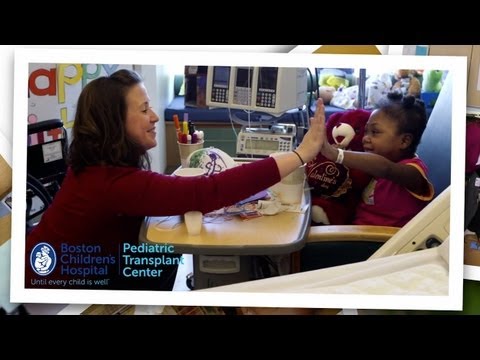
Learn more about the Pediatric Transplant Center - one of the most advanced pediatric transplant centers in the country.
30 Years of Liver Transplant
Our team has spent more than three decades giving thousands of children with end-stage liver disease a second chance at life.
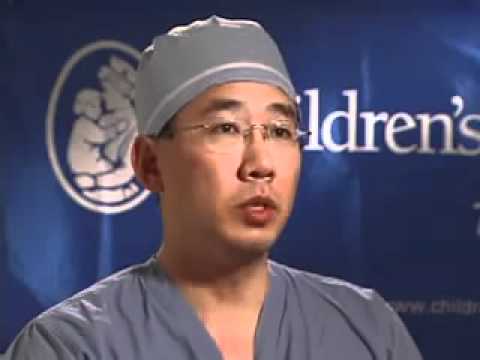
STEP Procedure
Dr. Heung Bae Kim on the STEP procedure.
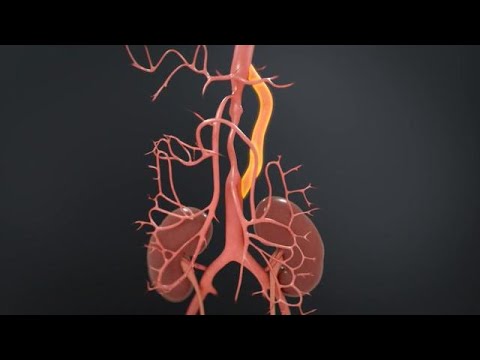
MAGIC Procedure
Watch Heung Bae Kim, MD explain Mesenteric Artery Growth to Improve Circulation (MAGIC), a type of surgery he helped pioneer for midaortic syndrome.
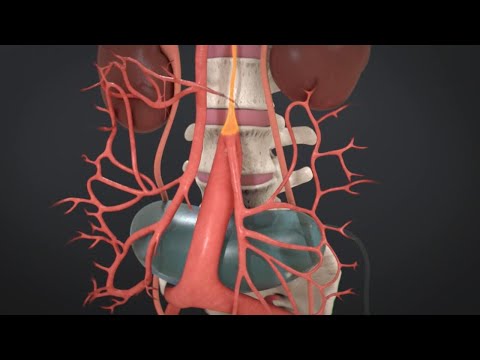
TESLA Procedure
Watch Heung Bae Kim, MD explain Tissue Expander Stimulated Lengthening of the Arteries (TESLA), a procedure he helped pioneer for midaortic syndrome.
#becauseofadonor - Mac
Meet Mac - a kidney transplant recipient at Boston Children's Hospital.

#becauseofadonor - Bri
Meet Bri - a kidney transplant recipient at Boston Children's Hospital
#becauseofadonor - Tom
Tom received his liver transplant at 15 years old. #becauseofadonor, Tom is able to run the Boston Marathon.

Justin's Story
Justin seemed perfectly healthy, but at a routine checkup to clear him for football season, his pediatrician noticed his blood pressure was extremely high. Tests uncovered a troubling diagnosis: Midaortic syndrome.
Certifications
American Board of Surgery (General)
American Board of Surgery (Pediatric Surgery)
American Society of Transplant Surgeons
Professional History
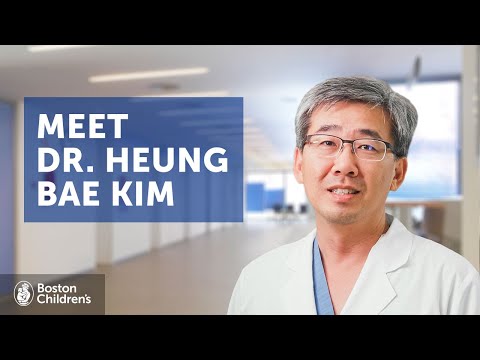
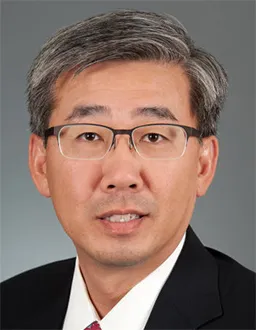
Dr. Heung Bae Kim is a Professor of Surgery at Harvard Medical School and the Weitzman Family Chair in Surgical Innovation at Boston Children’s Hospital (BCH). He currently serves as the Vice Chair for Clinical Operations in the Department of Surgery, Director of the Pediatric Transplant Center and the Co-Director, Surgical Innovation Fellowship at BCH. Born in Korea but raised in Philadelphia, Dr. Kim attended Yale University as an undergraduate and the Albert Einstein College of Medicine before starting his general surgical training at the Hospital of the University of Pennsylvania. After completing his Pediatric Surgical Fellowship in 2002 at BCH and his Liver Transplant Fellowship at the Lahey Clinic in 2004, he assumed the surgical directorship of both the liver and kidney transplant programs and started the only intestine transplant program in New England, completing the first multivisceral transplant in 2004. Under his leadership, the Pediatric Transplant Center has grown into one of the busiest and most comprehensive pediatric transplant centers in the country.
Dr. Kim has a wide range of clinical and research interests. His early work as a fellow at the Transplantation Biology Research Center with Dr. David Sachs focused on transplant tolerance induction in miniature swine using in utero stem cell transplantation, a research interest that he developed while a research fellow in the laboratory of Dr. Alan Flake at the Children’s Hospital of Philadelphia. In 2002, he developed a novel intestinal lengthening procedure known as the Serial Transverse Enteroplasty (STEP) to treat patients with short bowel syndrome and the STEP is now the preferred surgical procedure worldwide for this condition. He has also pioneered innovative approaches to transplantation of small children with vascular abnormalities and was the first in the world to successfully transplant a partial esophagus as part of a multivisceral transplant. Recently, he was involved in organizing one of the most comprehensive multidisciplinary centers in the world dedicated to the treatment of children with midaortic syndrome and renovascular hypertension. This has resulted in development of two novel methods to treat these children without the need for prosthetic grafts. The first known as Tissue Expander Stimulated Lengthening of Arteries (TESLA) is a procedure in which the normal aorta is lengthened using a tissue expander allowing for aortic replacement without a prosthetic graft. The second known as Mesenteric Artery Growth Improves Circulation (MAGIC) takes advantage of the natural ability of arteries to grow when placed into the correct environment and uses one of these arteries as the actual bypass graft, again avoiding the need for prosthetic graft material in small growing children. He has recently started a surgical innovation fellowship at BCH aimed at training and developing the next generation of surgical innovators.
Dr. Kim has won numerous academic awards including the Penn Pearls Teaching Award for medical student teaching at the University of Pennsylvania, the Keith Reemstma Surgical Resident of the Year Award at Penn (voted by the attending staff among all surgical residents), the Rosenkrantz Resident Research Award for the best presentation at the American Academy of Pediatrics Surgical Section, and the Teacher of the Year Award at BCH three times as the best teacher as voted by the surgical residents. In 2013, he was the first recipient of the Sheikh Zayed Prize for Pediatric Surgical Innovation at the Pediatric Surgical Innovation Symposium in Washington DC. He has served in several national leadership roles at the United Network for Organ Sharing (UNOS) including the Chair of the Pediatric Transplantation Committee, Region 1 Councillor and Region 1 Representative to the Board of Directors. He is currently Vice Chair of the Membership and Professional Standards Committee at UNOS and is also currently serving as Chair of the Board of Trustees of New England Donor Services. He has lectured worldwide on his clinical and research interests and was invited to Japan to perform the first STEP procedure in that country. He has coauthored more than 100 original papers or chapters and has contributed significantly to both the pediatric surgical and the transplantation literature.
Publications
From STEP to MAGIC: Patient-Inspired Surgical Innovation. View Abstract
Early Graft Loss With Suspected Seventh-Day Syndrome Following Pediatric Liver Transplantation. View Abstract
Effect of citizenship status on access to pediatric liver and kidney transplantation. View Abstract
Clinical and immunophenotype correlating with response to immunotherapy in paediatric patients with primary liver carcinoma. A case series. View Abstract
Cold Therapy for Pain Control in Pediatric Appendectomy Patients: A Randomized Controlled Trial. View Abstract
Metastatic pulmonary calcifications after pediatric liver transplantation. View Abstract
Autologous and synthetic pediatric iliofemoral reconstruction: a novel technique for pediatric iliofemoral artery reconstruction. View Abstract
Immediate extubation after pediatric liver transplantation: Update on a single-center experience. View Abstract
Outcomes of laparoscopic gastrostomy in children with and without the use of a modified T-fastener technique. View Abstract
Attitudes Toward Surgical Innovation Research in the Pediatric Surgery Fellowship Match. View Abstract
Equity factors in pediatric transplant listing: Initial findings from a single center review. View Abstract
Pediatric button battery ingestion: A single center experience and risk score to predict severe outcomes. View Abstract
Staple aneurysmorrhaphy and suture venoplasty for repair of large bilateral external iliac vein aneurysms in an adolescent. View Abstract
Outcomes of internal biliary diversion using cholecystocolostomy for patients with severe Alagille syndrome. View Abstract
Functional side-to-side splenorenal shunts to treat extrahepatic portal vein thrombosis in children. View Abstract
Triple gallbladder with heterotopic gastric mucosa: a case report. View Abstract
Prenatal diagnosis of rapidly enlarging choledochal cyst with gastric outlet obstruction. View Abstract
Midaortic syndrome and renovascular hypertension. View Abstract
The Paired T-Fastener Technique: A Bolster-Free Gastropexy for Laparoscopic Gastrostomy Tube Placement. View Abstract
Utilization of the Boston Children's Hospital SRTR Cohort Visualization Tool to increase team understanding of reporting cohorts. View Abstract
Trends in Surgical Patents Held by Surgeons From 1993 to 2018. View Abstract
Surgical management of pediatric renovascular hypertension and midaortic syndrome at a single-center multidisciplinary program. View Abstract
Transient elastography assessment of liver allograft fibrosis in pediatric transplant recipients. View Abstract
The re-occurrence of cardiomyopathy in propionic acidemia after liver transplantation. View Abstract
Biliary Atresia: Biliary-Enteric Drainage or Primary Liver Transplant? View Abstract
Donor-to-recipient weight ratio is a risk factor for hepatic artery thrombosis after whole-liver transplantation in children under 25 kg. View Abstract
Impact of standardized protocols for cytomegalovirus disease prevention in pediatric solid organ transplant recipients. View Abstract
Perioperative renal transplantation management in small children using adult-sized living or deceased donor kidneys: A single-center experience. View Abstract
Predictors of Need for Liver Transplantation in Children Undergoing Hepatoportoenterostomy for Biliary Atresia. View Abstract
Whole Exome Sequencing Reveals a Monogenic Cause of Disease in ˜43% of 35 Families With Midaortic Syndrome. View Abstract
To Split or Not to Split? That is No Longer the Question. View Abstract
Tissue expander-stimulated lengthening of arteries for the treatment of midaortic syndrome in children. View Abstract
Bilateral native nephrectomy to reduce oxalate stores in children at the time of combined liver-kidney transplantation for primary hyperoxaluria type 1. View Abstract
Incidence and predictors of massive bleeding in children undergoing liver transplantation: A single-center retrospective analysis. View Abstract
Multivisceral transplantation for abdominal tumors in children: A single center experience and review of the literature. View Abstract
Umbilical Venous Catheter Malposition Is Associated with Necrotizing Enterocolitis in Premature Infants. View Abstract
Variation in resource utilization in liver transplantation at freestanding children's hospitals. View Abstract
Successful Recovery and Transplantation of 11 Organs Including Face, Bilateral Upper Extremities, and Thoracic and Abdominal Organs From a Single Deceased Organ Donor. View Abstract
YAP Subcellular Localization and Hippo Pathway Transcriptome Analysis in Pediatric Hepatocellular Carcinoma. View Abstract
Outcomes after discontinuation of routine use of transanastomotic biliary stents in pediatric liver transplantation at a single site. View Abstract
Strain induced esophageal growth in a novel rodent model. View Abstract
Tissue expander stimulated lengthening of arteries (TESLA) induces early endothelial cell proliferation in a novel rodent model. View Abstract
The effect of graft type on mortality in liver transplantation for hepatocellular carcinoma. View Abstract
Bone marrow engraftment and associated dermatologic sequelae in a three-yr-old after liver transplantation. View Abstract
Treatment and outcomes of immune cytopenias following solid organ transplant in children. View Abstract
Frostbite of the liver: an unrecognized cause of primary non-function? View Abstract
First STEPs: serial transverse enteroplasty as a primary procedure in neonates with congenital short bowel. View Abstract
Ductus venosus closure results in transient portal hypertension--is this the silent trigger for necrotizing enterocolitis? View Abstract
Deceased-donor split-liver transplantation in adult recipients: is the learning curve over? View Abstract
Deceased donor liver transplantation in infants and small children: are partial grafts riskier than whole organs? View Abstract
Pediatric blunt abdominal aortic injury and the use of intra-operative aortic ultrasound for surgical decision making. View Abstract
Midaortic syndrome: 30 years of experience with medical, endovascular and surgical management. View Abstract
Pulmonary support on day 30 as a predictor of morbidity and mortality in congenital diaphragmatic hernia. View Abstract
Organ donation for children: the road ahead. View Abstract
Transjugular retrograde cannulation of the portal vein via patent ductus venosus: alternative access for endovascular hepatic interventions. View Abstract
A novel treatment for the midaortic syndrome. View Abstract
Bowel re-dilation following serial transverse enteroplasty (STEP). View Abstract
Bilateral lung transplant for hereditary hemorrhagic telangiectasia in a pediatric patient. View Abstract
Rapid reversal of uremic neuropathy following renal transplantation in an adolescent. View Abstract
Hypertrophic osteoarthropathy in intestinal transplant recipients. View Abstract
Urgent revascularization for hepatic artery thrombosis: maybe good for the few, definitely good for the many. View Abstract
Autologous intestinal reconstruction surgery for intestinal failure management. View Abstract
Combined en bloc liver-double kidney transplantation in an infant with IVC thrombosis. View Abstract
Small intestinal volvulus caused by loose surgical staples. View Abstract
Hepatic failure in a rapidly involuting congenital hemangioma of the liver: failure of embolotherapy. View Abstract
A murine model of graft-vs-host disease after in utero hematopoietic cell transplantation. View Abstract
Neonatal hemochromatosis and patent ductus venosus: clinical course and diagnostic pitfalls. View Abstract
Long-term nutritional and clinical outcomes after serial transverse enteroplasty at a single institution. View Abstract
Thoracoscopic aortopexy for treatment of tracheomalacia in infants and children. View Abstract
Preservation of intestinal motility after the serial transverse enteroplasty procedure in a large animal model of short bowel syndrome. View Abstract
Hepatoblastoma presenting with focal nodular hyperplasia after treatment of neuroblastoma. View Abstract
Safety of minimal immunosuppression in liver transplantation for hepatoblastoma. View Abstract
Ileal exclusion for refractory symptomatic cholestasis in Alagille syndrome. View Abstract
First report of the international serial transverse enteroplasty data registry: indications, efficacy, and complications. View Abstract
The second STEP: the feasibility of repeat serial transverse enteroplasty. View Abstract
Serial transverse enteroplasty for management of refractory D-lactic acidosis in short-bowel syndrome. View Abstract
Growth and nutritional status in infants with short-bowel syndrome after the serial transverse enteroplasty procedure. View Abstract
Serial transverse enteroplasty enhances intestinal function in a model of short bowel syndrome. View Abstract
Mesogonadal shunts for extrahepatic portal vein thrombosis and variceal hemorrhage. View Abstract
The role of enteral nutrition in the reversal of parenteral nutrition-associated liver dysfunction in infants. View Abstract
Serial transverse enteroplasty is associated with successful short-term outcomes in infants with short bowel syndrome. View Abstract
In utero bone marrow transplantation induces kidney allograft tolerance across a full major histocompatibility complex barrier in Swine. View Abstract
Stable multilineage chimerism across full MHC barriers without graft-versus-host disease following in utero bone marrow transplantation in pigs. View Abstract
Congenital absence of the right upper lobe bronchus with double segmental tracheal bronchi. View Abstract
Rapid recurrence of nonalcoholic fatty liver disease after transplantation in a child with hypopituitarism and hepatopulmonary syndrome. View Abstract
Esophageal atresia, duodenal atresia, and unilateral lung agenesis: a case report. View Abstract
Contouring buttock reconstruction after sacrococcygeal teratoma resection. View Abstract
In utero hematopoietic cell transplantation: what are the important questions? View Abstract
Serial transverse enteroplasty for short bowel syndrome: a case report. View Abstract
Ultrasonographic guidance for location of the trachea during the EXIT procedure for cervical teratoma. View Abstract
Serial transverse enteroplasty (STEP): a novel bowel lengthening procedure. View Abstract
Life threatening tension pneumoperitoneum from intestinal perforation during air reduction of intussusception. View Abstract
Fetal wound repair results in scar formation in interleukin-10-deficient mice in a syngeneic murine model of scarless fetal wound repair. View Abstract
A kinetic model for the homing and migration of prenatally transplanted marrow. View Abstract
Postnatal booster injections increase engraftment after in utero stem cell transplantation. View Abstract
In utero bone marrow transplantation induces donor-specific tolerance by a combination of clonal deletion and clonal anergy. View Abstract
Persistent postnatal transgene expression in both muscle and liver after fetal injection of recombinant adenovirus. View Abstract
The role of ultrasonography in fetal surgery and invasive fetal procedures. View Abstract
Microchimerism and tolerance after in utero bone marrow transplantation in mice. View Abstract
Orthotopic liver transplantation for inflammatory myofibroblastic tumor of the liver hilum. View Abstract
Management of an abdominal cerebrospinal fluid pseudocyst using laparoscopic techniques. View Abstract
Digitally assisted laparoscopic drainage of multiple intraabdominal abscesses. View Abstract