Katrina Boyer, PhD

Director of the Neuropsychology of Epilepsy Program, Epilepsy Center; Director of Clinical Services, Center for Neuropsychology
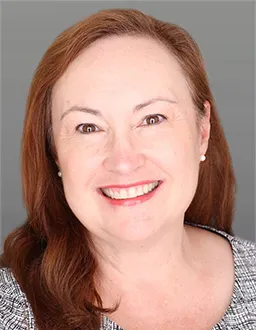
Assistant Professor of Psychology, Department of Psychiatry, Harvard Medical School
Image
Katrina Boyer, PhD

Katrina Boyer, PhD

Director of the Neuropsychology of Epilepsy Program, Epilepsy Center; Director of Clinical Services, Center for Neuropsychology
Assistant Professor of Psychology, Department of Psychiatry, Harvard Medical School

Medical Services

Languages
English
Education
Undergraduate School
California State University
1995
Rohnert Park
CA
Graduate School
Masters, Clinical Psychology
California School of Professional Psychology
1998
San Diego
CA
Graduate School
PhD, Clinical Psychology
California School of Professional Psychology
2002
San Diego
CA
Fellowship
Post-Doctoral
Columbus Children's Hospital, The Ohio State University
2003
Columbus
OH
Professional History

My work as a pediatric neuropsychology is focused on understanding how children living with epilepsy develop, taking into account systems that influence brain development, including family, community and biology. The child’s behavior also alters these systems; this dynamic interchange outlines the neurodevelopmental process determining function up to the present time and identifies factors that can be harnessed as agents of change in future stages of development. 

The child’s behavior also alters these systems; this dynamic interchange outlines the neurodevelopmental process determining function up to the present time and identifies factors that can be harnessed as agents of change in future stages of development.  History is gathered from informants about environments, relationships, behavior and development to date and detailed medical history is interwoven with the social system.

For the last 12 years I have developed the Neuropsychology of Epilepsy Program within the Epilepsy Center at Boston Children’s Hospital (BCH). I was the first neuropsychologist hired into the Epilepsy Center and Department of Neurology. I blazed a trail, building a clinical and research program from the ground up. Demand for neuropsychology services for epilepsy patients increased over time and six years ago I was able to recruit and hire a second neuropsychologist to work under my direction while simultaneously training two fellows per year and providing educational instruction throughout the Harvard Medical School system. We have recently hired a third neuropsychologist and will increase research collaborations and clinical capacity.

My research has focused on the behavioral and cognitive developmental disruption of interictal epileptiform discharges in patients with benign rolandic epilepsy as well as neuropsychological outcome of pediatric epilepsy surgery. I am fascinated by questions about disease mechanisms that effect development and designing research methods to bring us closer to answering these questions and ultimately helping children with these conditions thrive in their development. It is an exciting time to work in fields that intersect developmental neuroscience as it moves towards an appreciation of functional brain systems.

Approach to Care
From a young age I knew that I would be involved in a profession directly helping others. Through studies, I became intrigued by the brain and the neural basis of emotions, perception and behavior. The development of these neural systems throughout childhood and the influence of social advantage and adversity on developmental outcome captured my fascination and led me toward the path of pediatric neuropsychology.

Publications

Association of the cognitive lateralization rating Index with surgical variables of a national cohort of pediatric patients with epilepsy. View Abstract
Epilepsy surgery in Sturge-Weber syndrome with unilateral or bilateral asymmetric brain involvement: Boston Children's Hospital experience. View Abstract
Leveraging expertise and optimizing clinical research: Initial success of a pediatric epilepsy surgery collaborative. View Abstract
Long-term neuropsychological outcomes in children with febrile infection-related epilepsy syndrome (FIRES) treated with anakinra. View Abstract
Lexical retrieval pre- and posttemporal lobe epilepsy surgery in a pediatric sample. View Abstract
Passive fMRI mapping of language function for pediatric epilepsy surgical planning: validation using Wada, ECS, and FMAER. View Abstract
Rehabilitation issues in Landau-Kleffner syndrome. View Abstract
Benign rolandic epileptiform discharges are associated with mood and behavior problems. View Abstract
Longer duration of epilepsy and earlier age at epilepsy onset correlate with impaired cognitive development in infancy. View Abstract
A survey of parent satisfaction with pediatric neuropsychological evaluations. View Abstract
Psychiatric disorders and behavioral characteristics of pediatric patients with both epilepsy and attention-deficit hyperactivity disorder. View Abstract
A Survey of Parent Satisfaction With Pediatric Neuropsychological Evaluations View Abstract
Psychiatric Disorders and Behavioral Characteristics of Pediatric Patients with Epilepsy and ADHD View Abstract
Working memory and information processing speed in children with myelomeningocele and shunted hydrocephalus: analysis of the children's paced auditory serial addition test. View Abstract
Behavioral and Emotional Functioning in Patients with Epilepsy Treated with Vagal Nerve Stimulator: A Naturalistic Follow-Up Study View Abstract
Improved Neuropsychological Function Following Resection of Hypothalamic Hamartoma: 3 Case Studies View Abstract
The Influency of Working Memory Load on Matching Law Performance in Nine to Twelve Year Old Children View Abstract
The Influence of Working Memory Load on Matching Law Performance in Nine to Twelve Year Old Children View Abstract
Exploring effects of different pictorial stimuli on written expression. View Abstract
Transplacental passage of IgG antibody to group B streptococcus serotype Ia. View Abstract
Comparison of assays for antibody to group B Streptococcus, type III. View Abstract
Response of children with cardiac disease to the bivalent influenza A vaccines. View Abstract
Multicenter two-dose trials of bivalent influenza A vaccines in asthmatic children aged six to 18 years. View Abstract