Popular Search Terms


Research
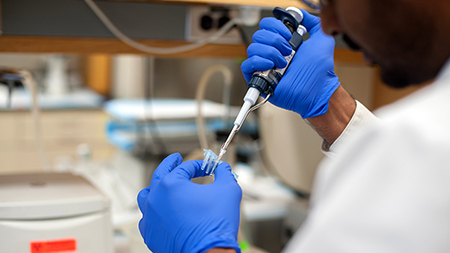
Boston Children’s Hospital is home to the world’s largest research program at a pediatric institution, and we’re known for pioneering new treatments. A large part of our success comes from our commitment to research, which allows us to advance the field of transplantation through our innovative approach.
Scientists in our Kidney Transplant Program are world leaders in pediatric kidney transplant research and are devoted to developing new approaches to transplantation that will minimize unwanted side effects and improve the quality of children’s lives. Our researchers are working to improve anti-rejection medication protocols, with the goal of promoting optimal transplant outcomes, while reducing unwanted side effects and complications.
Setting the stage: NIH research initiatives
Boston Children's comprises only a small fraction of the number of kidney transplants performed each year, and no pediatric kidney transplant program performs more than 25 or so transplants. For that reason, there have been, until recently, very few informative studies of transplant techniques in children. But that has changed over the last 15 years.
Recognizing the value of multi-center research programs, the National Institutes of Health (NIH) organized the Cooperative Clinical Trials in Pediatric Transplantation (CCTPT) in 1994. The CCTPT began and continues to develop and test innovative studies of kidney transplantation and perform studies on blood, urine and biopsy specimens obtained during these studies to determine how well children absorb, metabolize and utilize immunosuppressive medications.
More sophisticated studies were undertaken to determine how these medications affected the child’s immune system and to predict rejection before it occurred. In 2008, the NIH expanded this program to include pediatric heart and lung transplantation and to double the number of groups involved in the research.
This expanded program took on the new name of Clinical Trials in Organ Transplantation in Children (CTOT-C) at that time.
CCTPT and CTOT-C research at Boston Children's
Since the founding of these programs, the Boston Children's Hospital Kidney Transplant Program has participated in every kidney research project of CCTPT and CTOT-C. We have given our patients the opportunity to participate in important and innovative trials developed by this group. The results of these studies have made significant changes to the way we treat children after transplantation. Since the research group began, young children have gone from having the worst long-term outcomes of all kidney transplant recipients to the best group. Young children now have the best five-year graft survival rates of any age group.
While CCTPT and CTOT-C cannot claim full responsibility for this remarkable improvement, there is no question that the studies, as well as the experience gained from research collaboration, played an important role. The studies have made some important clinical contributions.Three of the studies have conclusively demonstrated that steroids (prednisone) are no longer necessary for the majority of pediatric kidney transplant recipients. Two other studies have suggested that one class of immunosuppressive medications, known as calcineurin inhibitors, may also no longer be necessary either. Although this group is the most powerful in preventing transplant rejection, it is also harmful to the kidney, likely leading to scarring of the kidney.
Elimination of this class of medications may lead to longer survival of the kidneys, which is particularly important for children. Although most children have required three separate medications to prevent rejection, these studies have allowed us to use just two. And, our most recent trial is reducing that to only one medication after several years. The ultimate goal of these studies is to justify the use of fewer chronic medications and thereby reduce long-term complications.
Current and forthcoming research
We are currently testing the success of a trial that requires children to take only one chronic immunosuppressive medication following kidney transplantation. We are also enrolling children in a study that determines whether they develop antibodies after transplantation and whether those antibodies cause long-term damage to the kidneys. This study will also determine whether a new medication may stop the production of those antibodies.
Soon we’ll begin a study of “adherence” following kidney transplantation in children. Unfortunately, kidney transplant recipients must take medicine every day to prevent rejection of the kidney. It is difficult to adhere to this medication schedule. Some children, particularly adolescents, may not follow these medication schedules faithfully. We will soon perform trials designed to identify why the schedules may not be followed completely and what we can do to improve adherence to them.
We hope to begin testing a new class of medication that can be given only once per month — which should simplify the adherence schedule substantially.
Additional information about our research is available, including a list of transplant studies currently enrolling eligible patients.