Luis Guillermo Quinonez, MD, FRCSC
Cardiac Surgeon, Department of Cardiac Surgery; Director, Surgical Coronary Artery Program
Instructor of Surgery, Harvard Medical School
Image

Luis Guillermo Quinonez, MD, FRCSC
Cardiac Surgeon, Department of Cardiac Surgery; Director, Surgical Coronary Artery Program
Instructor of Surgery, Harvard Medical School
Medical Services
Languages
English
Spanish
Education
Undergraduate School
University of Manitoba
1989
Winnipeg, Manitoba
Canada
Medical School
University of Manitoba
1993
Winnipeg, Manitoba
Canada
Residency
General Surgery
McMaster University
1999
Hamilton, Ontario
Canada
Residency
Thoracic Surgery
Université de Montréal
2001
Montréal , Québec
Canada
Residency
University of Manitoba
2004
Winnipeg, Manitoba
Canada
Fellowship
Advanced Adult Cardiovascular Surgery
Mayo Clinic
2006
Rochester
NY
Fellowship
Cardiac Transplantation and Assist Devices
Cleveland Clinic
2007
Cleveland
OH
Fellowship
Congenital Heart Surgery
University of Alberta
2008
Edmonton Alberta
Canada
Fellowship
Congenital Heart Surgery
Boston Children's Hospital
2013
Boston
MA
Media
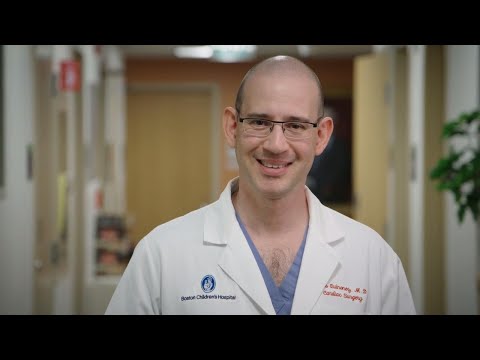
Caregiver Profile
Meet Dr. Luis Guillermo Quinonez

Cardiac Conversations
Caring for anomalous coronary arteries
Professional History
Dr. Quinonez received his medical and surgical education in Canada. He graduated from medical school in 1993. He trained in general surgery, general thoracic surgery, and cardiac surgery and is a Fellow of the Royal College of Surgeons of Canada. He completed advanced training at the Mayo Clinic and Cleveland Clinic. After returning to Canada, he undertook congenital cardiac surgical training and joined the attending staff at Stollery Children’s Hospital in Edmonton in 2008. He and his wife came to Boston Children’s Hospital in 2012 and have been here ever since.
Approach to Care
I treat patients and families as I would want to be treated. I believe in the value of an unhurried discussion before surgery to gain mutual trust. I know I can’t take the stress away, but I can provide information and understanding. I hope my background and ability to speak Spanish will help some patients feel more at ease. Finally, I believe everyone should have access to healthcare.
Publications
Primary repair versus pulmonary artery banding in complete atrioventricular canal defects in the modern surgical era. View Abstract
Repeat Repair After Translocation of an Anomalous Left Coronary Artery. View Abstract
Postoperative Troponin Levels in Children Undergoing Open Heart Surgery With and Without Coronary Intervention. View Abstract
Histopathology of resected tissue from repair of anomalous aortic origin of a coronary artery: Potential mechanism of coronary artery compression. View Abstract
Trends in surgical management of anomalous aortic origin of the coronary artery over 2 decades. View Abstract
The Yasui operation: A single institutional experience over 30 years. View Abstract
Predictors of anesthesia ready time: Analysis and benchmark data. View Abstract
Computed tomography angiography (CTA) of anomalous aortic origin of a coronary artery (AAOCA): Which measurements are accurate and reliable? View Abstract
Patch augmentation of small ascending aorta during stage I procedure reduces the risk of morbidity and mortality. View Abstract
Hybrid Left Heart Bypass Circuit for Repair of the Descending Aorta in an 8-kg Williams Syndrome Patient. View Abstract
Repair of Anomalous Left Anterior Descending Coronary Artery Arising From the Pulmonary Artery Using a Dacron Interposition Bypass Graft. View Abstract
Relationship of Preoperative Thyroid Dysfunction to Clinical Outcomes in Pediatric Cardiac Surgery. View Abstract
The Use of Regional Catheters in Children Undergoing Repair of Aortic Coarctation. View Abstract
Surgical Repair of Congenital Atresia of the Left Coronary Ostium. View Abstract
Technical Performance Score: A Predictor of Outcomes After the Norwood Procedure. View Abstract
Factors Associated With Adverse Outcomes After Repair of Anomalous Coronary From Pulmonary Artery. View Abstract
Complications of Transthoracic Intracardiac and Central Venous Lines in Neonates Undergoing Cardiac Surgery. View Abstract
The Use of Non-ionic Contrast Agent for Lymphangiography and Embolization of the Thoracic Duct. View Abstract
Impact of a Composite Valved RV-PA Graft After Stage 1 Palliation. View Abstract
Clinical Utility of Preimplantation Homograft Cultures in Patients Undergoing Congenital Cardiac Surgery. View Abstract
Twenty Years of Anesthetic and Perioperative Management of Patients With Tetralogy of Fallot With Absent Pulmonary Valve. View Abstract
Phosphodiesterase Inhibitor-Based Vasodilation Improves Oxygen Delivery and Clinical Outcomes Following Stage 1 Palliation. View Abstract
Direct heart shunt placement for CSF diversion: technical note. View Abstract
What can we learn from a case report? It's not always about the Swiss cheese. View Abstract
Expandable Valve for Pediatric Application Constructed From Human Venous Valved Conduit Within a Stent. View Abstract
Prenatal Diagnosis and Management of Berry Syndrome, a Rare Conotruncal Anatomy. View Abstract
Outcomes of surgery for young children with multivessel pulmonary vein stenosis. View Abstract
Valve reconstruction for congenital mitral valve disease. View Abstract
Aortic root translocation (Nikaidoh procedure): Intermediate follow-up and impact of conduit type. View Abstract
Transposition of the great arteries and sinus venosus defect with partially anomalous pulmonary venous return: physiological and anatomic considerations. View Abstract
Which cardiovascular magnetic resonance planes and sequences provide accurate measurements of branch pulmonary artery size in children with right ventricular outflow tract obstruction? View Abstract
Spontaneous endogenous microbubbles in a child with Berlin heart ventricular assist device. View Abstract
Risk factors for surgical site infection after delayed sternal closure. View Abstract
Management of adults with congenital heart disease using videoconferencing across Western Canada: a 3-year experience. View Abstract
ß(3)-Adrenoceptor Antagonist SR59230A Attenuates the Imbalance of Systemic and Myocardial Oxygen Transport Induced by Dopamine in Newborn Lambs. View Abstract
What are patients really telling us? Comparison of survey responses and the medical record in cardiovascular surgical patients. View Abstract
Aberrant right subclavian artery from an aneurysmal diverticulum of Kommerell in an 84-year-old man. View Abstract
Results of the 1.5-ventricle repair for Ebstein anomaly and the failing right ventricle. View Abstract
Volume reduction surgery. How selective should we be? View Abstract
Locations