Vice Chair, Clinical Affairs; Hilary and Geoffrey Grove Family Chair in Urology; Director, Oncology, Transplant, & Bladder Exstrophy; Pediatric Urologist, Department of Urology
Associate Professor of Surgery, Harvard Medical School
Vice Chair, Clinical Affairs; Hilary and Geoffrey Grove Family Chair in Urology; Director, Oncology, Transplant, & Bladder Exstrophy; Pediatric Urologist, Department of Urology
Associate Professor of Surgery, Harvard Medical School
Jefferson Medical College, Thomas Jefferson University
1998
Philadelphia
PA
Internship
Surgery
University of Washington
1999
Seattle
WA
Residency
Surgery
University of Washington
2000
Seattle
WA
Residency
Urology
University of Washington
2003
Seattle
WA
Residency
Chief Urology Resident
University of Washington
2004
Seattle
WA
Fellowship
Pediatric Urology
Boston Children's Hospital
2007
Boston
MA
Media
Caregiver Profile
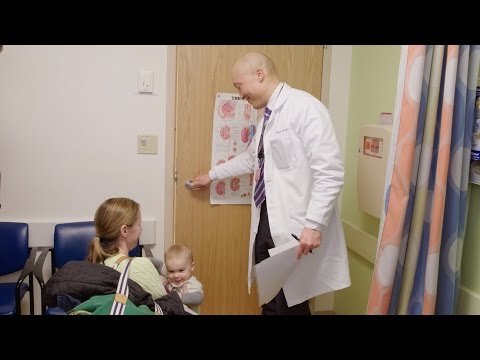
Meet Dr. Richard Lee
Certifications
American Board of Urology (Pediatric Urology)
Professional History
Richard S. Lee, MD is the Vice Chair, Research, Director of Pediatric Urologic Oncology, Director of Pediatric Urologic Transplantation, and the Co-Director of the Bladder Exstrophy Program. He is a board-certified pediatric urologist specializing in complex genitourinary reconstruction, including bladder exstrophy and other complex pelvic malformations, pediatric urologic oncology, pediatric renal transplantation and reconstruction, and robotic surgery. Dr. Lee received his undergraduate degree in Chemical Engineering at Princeton University and his medical degree at Jefferson Medical College. He completed his 6-year Urologic Surgery residency at the University of Washington and then trained in a 3-year pediatric urology fellowship at Boston Children’s Hospital, Harvard Medical School.
Dr. Lee has multiple research interests each with a strong focus on preservation of kidney function. His laboratory focuses on identifying urinary biomarkers of kidney injury, kidney obstruction and infection. He has received numerous research grants for his work and has been continuously federally funded by the National Institutes of Health (NIH) since 2007.
Publications
Multiomics analysis unveils an inosine-sensitive DNA damage response in neurogenic bladder after spinal cord injury. View Abstract
Long-Term Urinary and Sexual Outcomes in Pediatric Genitourinary Rhabdomyosarcoma Survivors: A Qualitative Study. View Abstract
Integrated omics analysis unveils a DNA damage response to neurogenic injury. View Abstract
Long-term Urological Outcomes in Pelvic Genitourinary Rhabdomyosarcoma: A 48-Year Single-center Experience. View Abstract
Prenatal Diagnosis of Bladder Exstrophy and OEIS over 20 Years. View Abstract
Copy Number Variation Analysis Facilitates Identification of Genetic Causation in Patients with Congenital Anomalies of the Kidney and Urinary Tract. View Abstract
Association between urinary biomarkers MMP-7/TIMP-2 and reduced renal function in children with ureteropelvic junction obstruction. View Abstract
Primary and secondary vaginal reconstruction with autologous buccal mucosa and intravaginal wound vacuum therapy. View Abstract
Malignancy Yield of Testis Pathology in Older Boys and Adolescents with Cryptorchidism. View Abstract
The Urinary Proteomic Profile Implicates Key Regulators for Urologic Chronic Pelvic Pain Syndrome (UCPPS): A MAPP Research Network Study. View Abstract
Proteomic Discovery of Noninvasive Biomarkers Associated With Sport-Related Concussions. View Abstract
Urinary Tract Infections in Children with Vesicoureteral Reflux Are Accompanied by Alterations in Urinary Microbiota and Metabolome Profiles. View Abstract
Uromodulin Isolation and Its N-Glycosylation Analysis by NanoLC-MS/MS. View Abstract
Characterizing Patients with Recurrent Urinary Tract Infections in Vesicoureteral Reflux: A Pilot Study of the Urinary Proteome. View Abstract
Modeling dynamic radial contrast enhanced MRI with linear time invariant systems for motion correction in quantitative assessment of kidney function. View Abstract
An in-depth Comparison of the Pediatric and Adult Urinary N-glycomes. View Abstract
Correction to: Prospective pediatric study comparing glomerular filtration rate estimates based on motion-robust dynamic contrast-enhanced magnetic resonance imaging and serum creatinine (eGFR) to 99mTc DTPA. View Abstract
Accuracy of Ultrasound in Identifying Renal Scarring as Compared to DMSA Scan. View Abstract
Prospective pediatric study comparing glomerular filtration rate estimates based on motion-robust dynamic contrast-enhanced magnetic resonance imaging and serum creatinine (eGFR) to 99mTc DTPA. View Abstract
Characterizing Patients with Recurrent Urinary Tract Infections in Vesicoureteral Reflux: A Pilot Study of the Urinary Proteome. View Abstract
Feed and wrap magnetic resonance urography provides anatomic and functional imaging in infants without anesthesia. View Abstract
CAKUT and Autonomic Dysfunction Caused by Acetylcholine Receptor Mutations. View Abstract
Renal outcomes of neonates with early presentation of posterior urethral valves: a 10-year single center experience. View Abstract
Interobserver and Intra-Observer Reliability of the Urinary Tract Dilation Classification System in Neonates: A Multicenter Study. View Abstract
Whole-Exome Sequencing Identifies Causative Mutations in Families with Congenital Anomalies of the Kidney and Urinary Tract. View Abstract
Collaborating with our adult colleagues: A case series of robotic surgery for suspicious and cancerous lesions in children and young adults performed in a free-standing children's hospital. View Abstract
Has the robot caught up? National trends in utilization, perioperative outcomes, and cost for open, laparoscopic, and robotic pediatric pyeloplasty in the United States from 2003 to 2015. View Abstract
Identification of novel non-invasive biomarkers of urinary chronic pelvic pain syndrome: findings from the Multidisciplinary Approach to the Study of Chronic Pelvic Pain (MAPP) Research Network. View Abstract
Urinary NGAL deficiency in recurrent urinary tract infections. View Abstract
Biomarkers for Wilms Tumor: A Brave New World. View Abstract
Universal Solid-Phase Reversible Sample-Prep for Concurrent Proteome and N-Glycome Characterization. View Abstract
Targeted sequencing of 96 renal developmental microRNAs in 1213 individuals from 980 families with congenital anomalies of the kidney and urinary tract. View Abstract
Yolk Sac Tumor of the Testis in Infants and Children: A Clinicopathologic Analysis of 33 Cases. View Abstract
Mutations in TBX18 Cause Dominant Urinary Tract Malformations via Transcriptional Dysregulation of Ureter Development. View Abstract
Dual modifications strategy to quantify neutral and sialylated N-glycans simultaneously by MALDI-MS. View Abstract
Pediatric robot assisted laparoscopic dismembered pyeloplasty: comparison with a cohort of open surgery. View Abstract
Pediatric retroperitoneal laparoscopic partial nephrectomy: comparison with an age matched cohort of open surgery. View Abstract
Indirect recognition of MHC class I allopeptides accelerates lung allograft rejection in miniature swine. View Abstract
Health A to Z: Epididymitis and Orchitis View Abstract
Commentary on: Timing of Follow-up Voiding Cystourethrogram in Children with Primary Vesicoureteral Reflux: Development and Application of a Clinical Algorithm View Abstract
Symptomatic refluxing distal ureteral stumps after nephroureterectomy and heminephroureterectomy. What should we do? View Abstract
Molecular cloning and characterization of canine ICOS. View Abstract
Hematopoietic stem cell transplantation does not restore dystrophin expression in Duchenne muscular dystrophy dogs. View Abstract
Intracorporeal laparoscopic appendicovesicostomy: a case report of a novel approach. View Abstract
Traumatic renal artery pseudoaneurysm: diagnosis and management techniques. View Abstract
FTY720 does not abrogate acute graft-versus-host disease in the dog leukocyte antigen-nonidentical unrelated canine model. View Abstract
Induction of tolerance to heart transplants by simultaneous cotransplantation of donor kidneys may depend on a radiation-sensitive renal-cell population. View Abstract
Postgrafting immunosuppression with sirolimus and cyclosporine facilitates stable mixed hematopoietic chimerism in dogs given sublethal total body irradiation before marrow transplantation from DLA-identical littermates. View Abstract
Intermediate outcomes of dual renal allografts: the University of Washington experience. View Abstract
Intermediate outcomes of dual renal allografts. View Abstract
Survival of small bowel transplants in canine mixed hematopoietic chimeras: preliminary results. View Abstract
Percutaneous central dual-lumen catheter for apheresis in the canine. View Abstract
A genome-wide screen for normally methylated human CpG islands that can identify novel imprinted genes. View Abstract
Treatment outcomes in localized prostate cancer: a patient-oriented approach. View Abstract
Salvage anterior C1-C2 screw fixation and arthrodesis through the lateral approach in a patient with a symptomatic pseudoarthrosis. View Abstract
Cervical Orthoses: A biomechanical and functional review View Abstract
An Examination of the Application of a Proton Exchange Membrane Fuel Cell for Cogeneration in a Hospital View Abstract