

Contact Us
Contact the Bone and Soft Tissue Tumors Program or DFCI
1-888-733-4662
International
+1-617-355-5209
Rotationplasty is one of several types of surgical procedures that can be used to treat malignant bone tumors, such as osteosarcoma or Ewing sarcoma, which occur near a child’s knee (in the lower part of the femur or upper tibia bone). This unusual procedure preserves the lower leg, attaches it to the thighbone, then uses the ankle as a knee joint.

Rotationplasty is a surgical procedure used to treat bone tumors in children that occur near the knee.
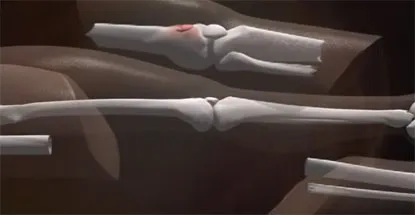
The bottom of the femur, the knee, and the upper tibia are surgically removed.
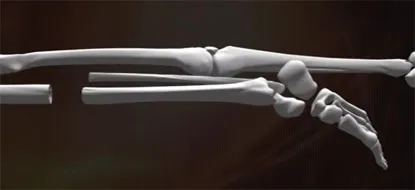
The lower leg is then rotated 180 degrees (which is why it’s called rotationplasty) and then attached to the femur.

The foot now is on the end of the thigh backwards. Because it’s backward it can function like a knee.

Through physical therapy instruction, the child learns to use the foot and ankle as a knee.
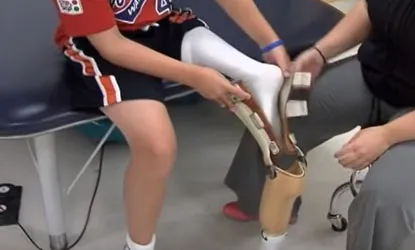
The patient's foot fits down inside a prosthesis and functions much the same as below-the knee amputation, providing the child much more mobility than he would have with a full leg amputation.
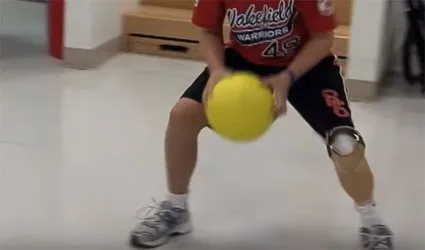
The concept of a rotationplasty is at first difficult to accept because the appearance is quite unusual; however, when inserted into a prosthesis the appearance is similar to any other amputation.
Rotationplasty is most often used for younger children (under age 12) who have so much growing left to do that other types of limb-salvage surgery options may not work well. With rotationplasty, the bone will continue to grow with the child, and the prosthesis can be lengthened as the patient grows. Also, younger children are generally better able to retrain their brain to use what used to be their ankle as a knee and to adapt their walking patterns accordingly.
However, rotationplasty also can be a good option for older children who have a very large tumor in which complete removal would be difficult. As long as the main nerves in the lower leg can be saved (since they will be needed to maintain leg function), rotationplasty is an option.
One of the major benefits of rotationplasty compared to other surgical options is that it allows the child to maintain a very active lifestyle. With limb-salvage surgery or full amputation, the child won’t be able to do high impact sports or jumping. With rotationplasty, however, most sports are possible, including baseball and soccer, and running can be nearly normal. Even sports where knee motion is important — such as bicycling, skiing, or horseback riding — are possible. With rotationplasty, the complication rate is low, and there is no phantom pain since the nerves are not cut for this procedure.
Because of the complexity and rarity of the procedure, few surgeons have experience performing rotationplasty. At Dana-Farber/Boston Children’s Cancer and Blood Disorders Center, two of our orthopedic surgeons — Mark Gebhardt, MD, and Megan Anderson, MD — have performed many rotationplasty procedures.
Children who undergo rotationplasty also require specialized prosthetics and physical therapy. At Dana-Farber/Boston Children’s, our prostheticians and physical therapists have specialized experience in helping children through the rotationplasty recovery process.
If you are interested in rotationplasty but aren’t sure if it’s the right option for you, our clinicians can put you in touch with other children and families who have gone through the procedure, so that you can better understand what to expect. Most families find this extremely helpful in making their decision.
For some children, rotationplasty may not be the best option. Other surgical options used to treat malignant bone tumors include: