Popular Search Terms


What is a torn meniscus?
The meniscus is a wedge-shaped structure in the knee that consists of fibrocartilage — a very tough but pliable material. The medial meniscus is located on the inside of the knee (toward the middle of the body), and the lateral meniscus is located on the outside of the knee. In the knee joint, the menisci act primarily as stabilizers and shock absorbers between the thighbone and the shinbone.
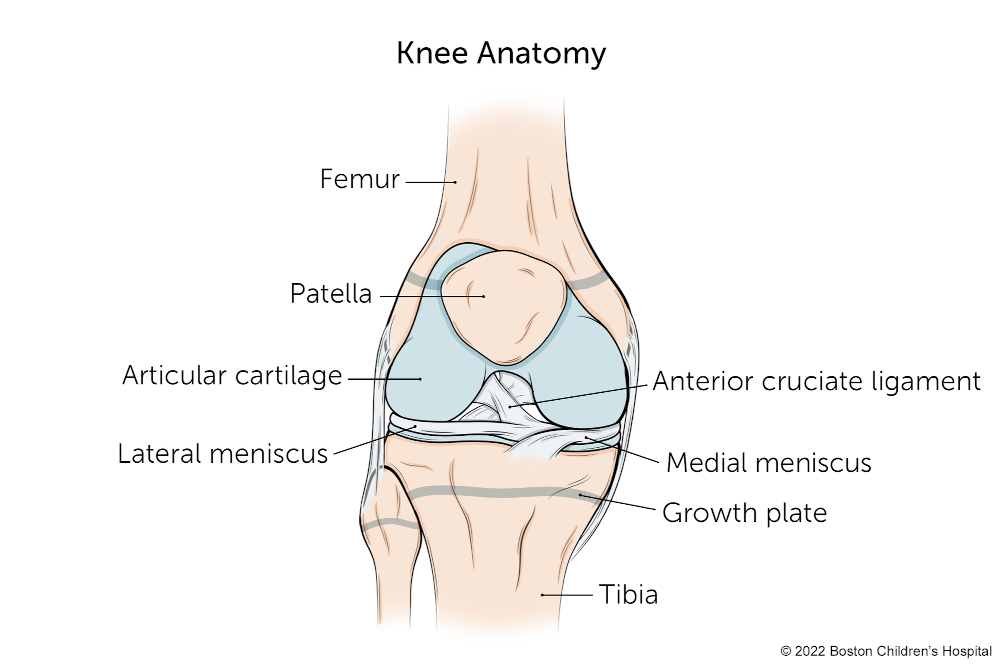
Any activity in which the knee is compressed or forcefully twisted or rotated can lead to a torn meniscus. With more and more children playing organized sports, there’s been a rise in the number of overuse injuries, as well as acute injuries like meniscus tears, among children and adolescents. There are more than 500,000 meniscal tears in the U.S. every year.
Football players and others athletes in contact sports can tear a meniscus when twisting the knee, pivoting, cutting, or decelerating. Meniscus tears can often happen in combination with other injuries such as a torn anterior cruciate ligament (ACL).
Symptoms & Causes
What are the symptoms of a torn meniscus?
The symptoms of a meniscus tear may include:
- A “popping” sensation in the knee
- Stiffness and swelling
- Pain when twisting or rotating the knee
- Difficulty in fully straightening the knee, or feeling like the knee is locking
- Tenderness in the joint line
- Collection of fluid (“water on the knee”)
What are the causes of a torn meniscus?
As more and more kids participate in organized sports, there’s been a rise in the number of meniscal tears and other overuse injuries (microtraumas to bones, tendons, ligaments, or muscles) among adolescents and children, largely from repetitively using the same parts of the body. Football, tennis, and basketball players can tear a meniscus by twisting the knee, pivoting, cutting, or decelerating.
In young athletes, the meniscus can tear in a number of different ways. They often get longitudinal or “bucket-handle” tears if the femur and tibia trap the meniscus when the knee turns. Less often, young athletes get a combination of tears called radial or “parrot beak,” in which the meniscus splits in two directions due to repetitive stress activities, such as running.
Diagnosis & Treatments
How is a torn meniscus diagnosed?
To diagnose a torn meniscus, your child’s orthopedic specialist will take a medical history and perform a physical exam on your child. The doctor will check for pain along the joint line, where the meniscus lies. He or she will conduct what’s called the McMurray Test, in which the knee is bent, then straightened and rotated. The tension on a torn meniscus from this manipulation will cause a clicking sound.
To confirm the diagnosis with detailed images of the injury, the doctor may also use:
- Magnetic resonance imaging (MRI)
- Arthroscopy: a minimally invasive outpatient procedure that inserts a small camera into the joint for the doctor to inspect
What are the treatment options for a torn meniscus?
Initial self-aid for a torn meniscus usually involves rest, ice, compression, and elevation, otherwise know as RICE, as well as medications to help control pain and swelling.
If your child's knee is stable and does not lock, the RICE formula, combined with nonsteroidal anti-inflammatory pain medication, may be all that's needed to treat the torn meniscus. Blood vessels feed the outer edges of the meniscus, giving that part the potential to heal on its own. So, small tears on the outer edges often heal themselves with rest.
Additional measures to support this conservative approach to treatment can be:
- Crutches to take pressure off the knee
- Exercises to strengthen and stabilize the muscles around the knee
- Arch supports or other shoe inserts to redistribute weight while walking
Surgical repair
If your child's meniscus tear doesn't heal on its own and the knee becomes painful, stiff or locked, it may need surgical repair. The goal of meniscal surgery is to obtain a stable, smooth rim of meniscal tissue that doesn't rub abnormally on the cartilage surfaces of the knee. (Patients may still have an increased risk of arthritis in the knee after a meniscal tear, even if surgery is performed.)
Depending on the type of meniscal tear, whether your child also has an injured ACL, your child's age, general health and other variables, the surgeon may recommend surgery using an arthroscope to:
- Place sutures to repair the meniscus
- Use small instruments to trim off damaged pieces of meniscal cartilage
What is the long-term outlook for children with a torn meniscus?
The good news is that 98 percent of patients with simple meniscus tears are able to return to sports and regular activities without knee instability. After your child’s knee has healed, and after the strength and stability have returned through physical therapy, he or she should be able to return to previous sports and activities — usually within six months.
How we care for a torn meniscus
At the Orthopedics and Sports Medicine Department at Boston Children’s Hospital, we will care for your child's knee with the least invasive option possible. Our team has treated thousands of children, adolescents, adults and professional athletes with injuries ranging from the minor to the highly complex. We can provide your child with expert diagnosis, treatment, and care — as well as the benefits of some of the most advanced clinical and scientific research in the world.
Practitioners Who Specialize In This Condition (7)

Stephanie Burgess, PA-C, MPAS, BLS, ACLS
Lead Physician Assistant, Sports Medicine Division
