Popular Search Terms


What is a broken femur?
A broken femur is a break in the thighbone. The femur is the longest, largest, heaviest, and strongest bone in the body. It makes standing and walking possible.
Because of the femur’s strength and size, femur fractures tend to occur only when the thighbone comes under significant force. Although great force is needed to break the thighbone, femur fractures in childhood are not uncommon.
If your child has any of symptoms of a broken bone, seek medical care immediately. If you see the bone poking out through the skin, do not move your child and call 911 right away.
Where is the femur?
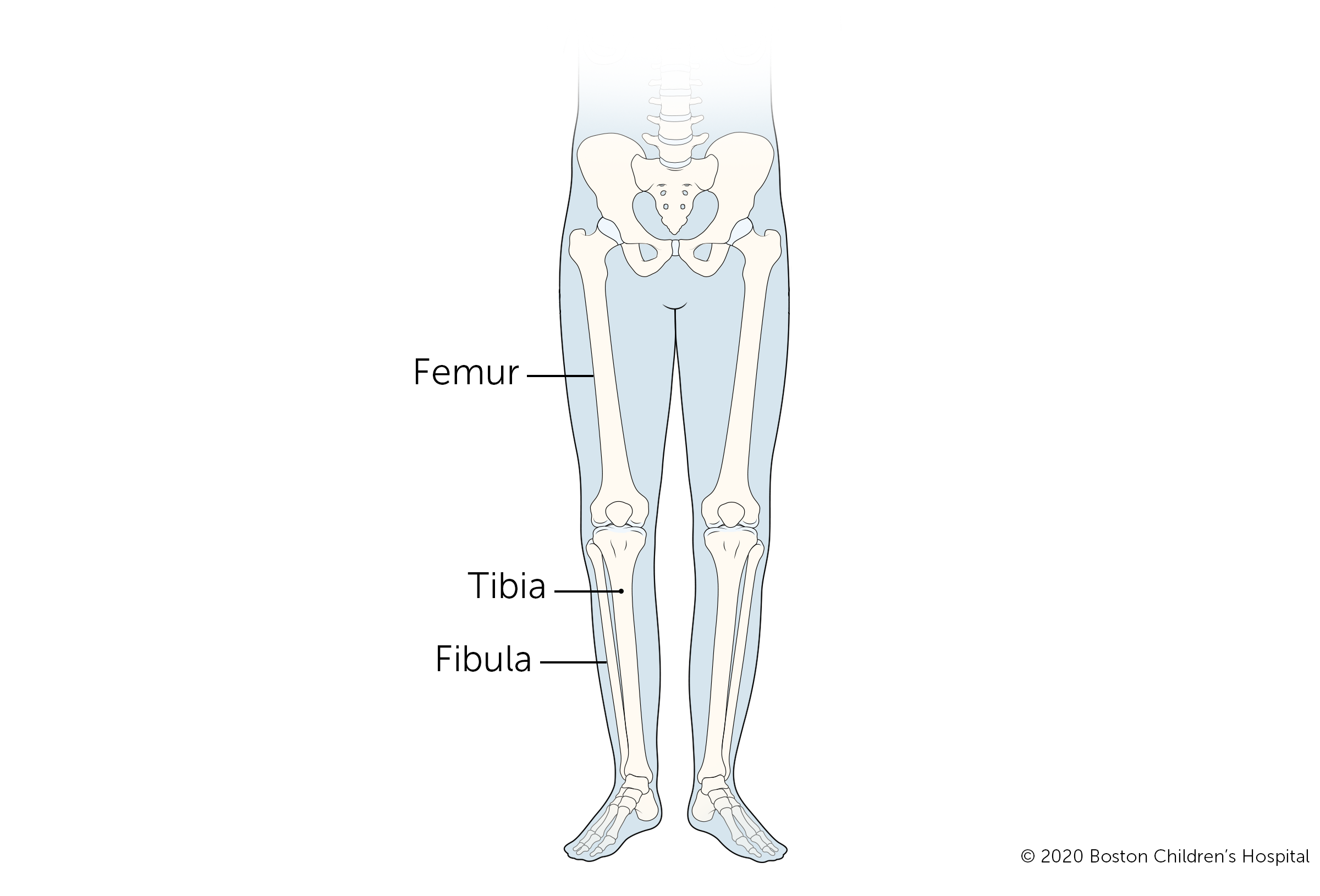
The leg has three long bones — the femur, tibia, and fibula — as well as a fourth bone, the patella, also known as the kneecap. The femur extends from the pelvis to the knee. The tibia and fibula are in the lower leg.
What are the different types of femur fractures?
One way to classify a broken femur is by the location of the break, which can occur in several locations.
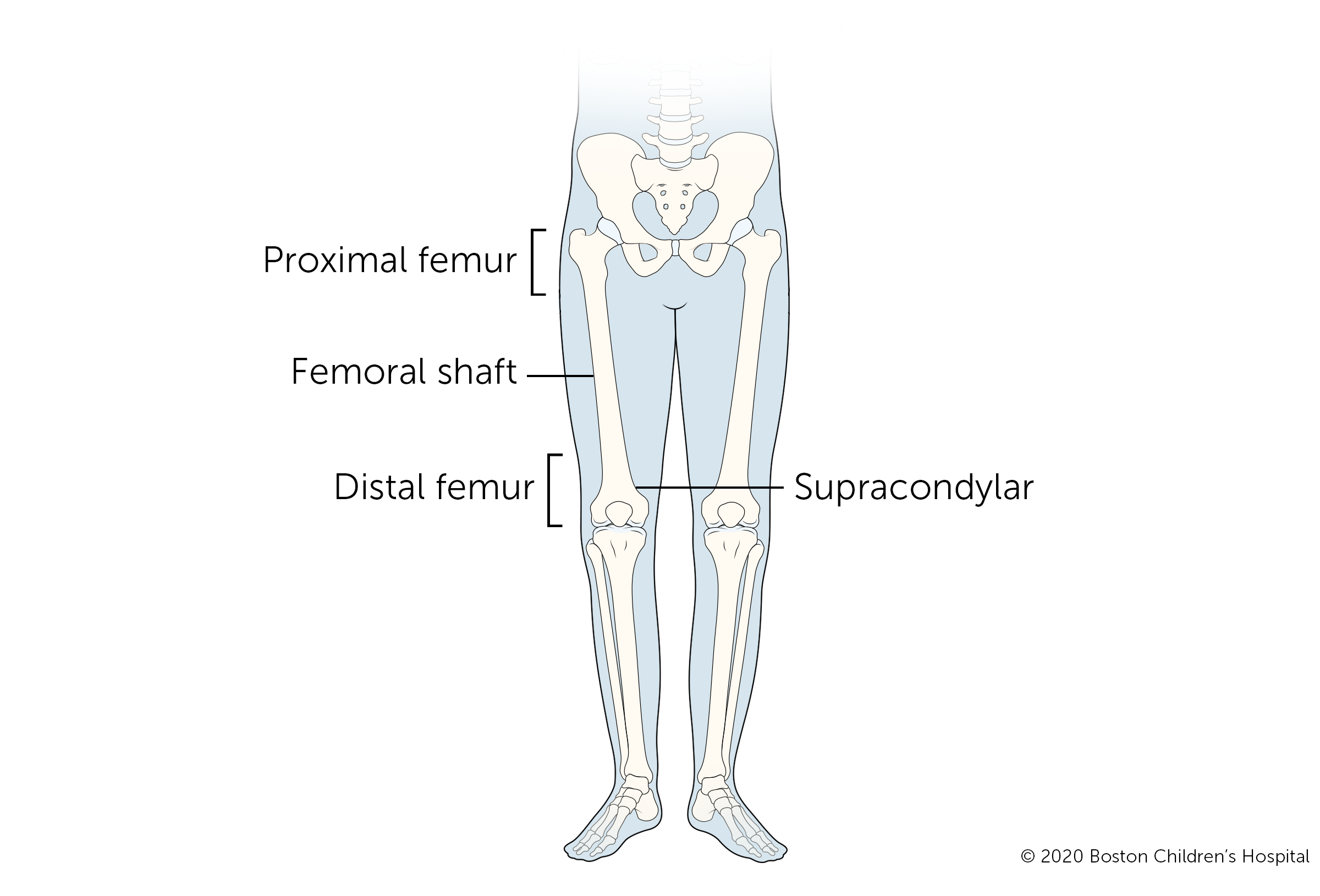
- A proximal femur fracture (hip fracture) is a break in the uppermost part of thighbone, next to the hip joint.
- A femoral shaft fracture is a break in the middle of the bone or narrow part of the femur. This type of fracture almost always requires treatment in the operating room.
- A supracondylar femur fracture is a break just above the knee joint and commonly occurs when the foot is planted and force is placed on the leg above the knee.
- A distal femur fracture is a break in the top part of the knee joint. This type of fracture can extend into the knee joint and disturb the cartilage and growth plate of the knee. A fracture in this area often requires surgical intervention to properly realign the bones.
Symptoms & Causes
What are the symptoms of a broken femur?
- Difficulty moving the leg
- Inability to stand or walk
- Pain or swelling in the thigh, possibly with bruising
- Deformity (abnormal shape) of the thigh
- Bone pushing out through the skin — sign of a severe fracture
What causes femur fractures?
Bones break when there’s more force applied to a bone than it can absorb. Fractures can occur from a fall, trauma, or direct blow.
Most childhood femur fractures result from:
- Falling, for instance, from stairs or a jungle gym
- Moderate to severe trauma that may happen in a car accident or during contact sports
Femur fractures in infants (up to 1 year old) are unusual, but can be caused by:
- Osteogenesis imperfecta and other medical conditions that cause weak bones
- A very difficult delivery
- Child abuse
Diagnosis & Treatments
How is a broken femur diagnosed?
A doctor will use different diagnostic tests to get detailed images of your child’s fracture. Typical tests include:
How is a broken femur treated?
Your child’s treatment for a broken femur will depend on their age and how seriously the bone is broken. Some broken femurs can be treated with reduction and casting, while others require an operation and fixation.
Closed reduction
A closed reduction is a procedure to manipulate and set (reduce) the fracture. Using an anesthetic, typically given through an IV, the doctor realigns the bone fragments from outside the body.
Casting
After reduction or surgery, your child will be put in a spica cast to hold the bone in place while it heals. If your child has surgery, the spica cast will also hold the hip or thigh muscles in place while they heal.
Types of spica casts used to treat broken femurs:
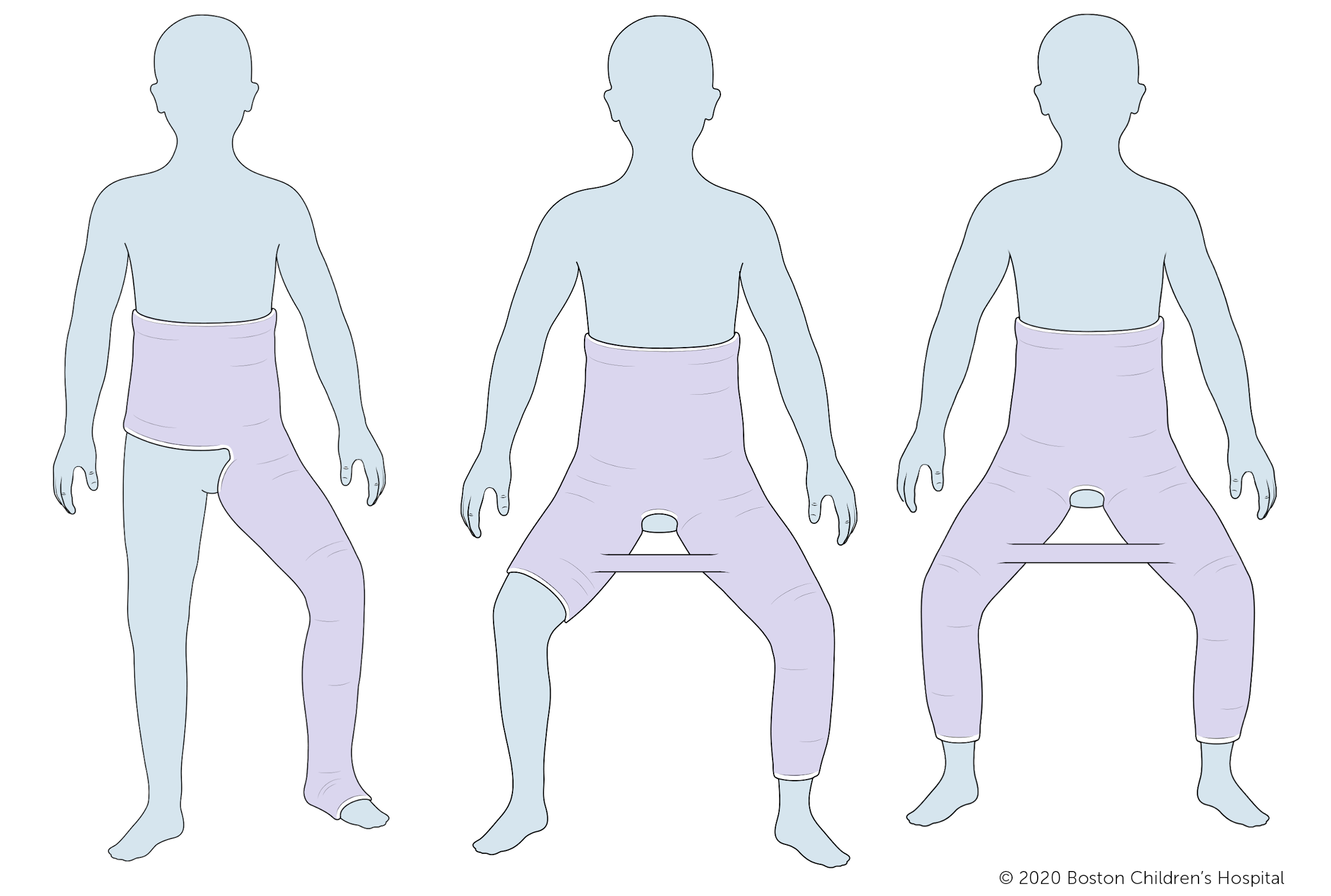
- Unilateral hip spica cast — starts at the chest and extends down to the ankle of the injured leg, leaving the uninjured leg free from a cast.
- One and one-half hip spica cast — starts at the chest and extends down to the ankle of the injured leg and to the knee of the other leg. Sometimes a bar is placed between both legs to keep the hips and legs immobilized and aid in lifting the child.
- Bilateral long leg hip spica cast — starts at the chest and extends to the ankles of both legs. Sometimes a bar is placed between the legs to keep the hips and legs from moving.
Once the cast is removed, your child may need a brace and physical therapy to strengthen their muscles and regain flexibility in their joints.
What are the surgical options for a broken femur?
Depending on the severity of the fracture, the surgeon may recommend one of the following procedures.
- Internal fixation: In severe or complicated fractures, a surgeon may insert metal rods or plate and screws into the femur to hold the fractured bone in place while it heals.
- External fixation: If internal fixation is not an option, metal pins can be inserted through skin into the fractured bone. These pins are attached to a bar that sits outside the skin on the child's thigh. The pins and bar hold the bone fragments in place and the bone in alignment while it heals.
- Intramedullary nails or rods: The surgeon may make small incisions in the skin and insert nails into the bone. The nails realign the bone and hold it in place while still allowing growth and natural remodeling.
How we care for broken femurs at Boston Children’s Hospital
Every year Orthopedics and Sports Medicine at Boston Children’s Hospital treats thousands of children, adolescents, and young adults with fractures of all complexities. Our pediatric expertise allows for precise diagnosis of conditions related to the growing musculoskeletal system and development of optimal care plans.
Our Orthopedic Urgent Clinic treats patients with orthopedic injuries that require prompt medical attention but are not serious enough to need emergency room care. We offer urgent care services in four locations — Boston, Waltham, Peabody, and Weymouth.
Practitioners Who Specialize In This Condition (3)
Colyn Watkins, MD
Orthopedic Surgeon, Orthopedics and Sports Medicine Department
Assistant Professor of Orthopedic Surgery, Harvard Medical School

Hunter Hatton, MSAT
Injury Prevention Specialist, The Micheli Center for Sports Injury Prevention; Sports Medicine Division
