Popular Search Terms


What is bowlegs?
Bowlegs (genu varum) is a condition in which a child’s legs curve outward at the knees. When a child with bowlegs stands with their toes pointing forward, their ankles may touch but their knees remain apart.
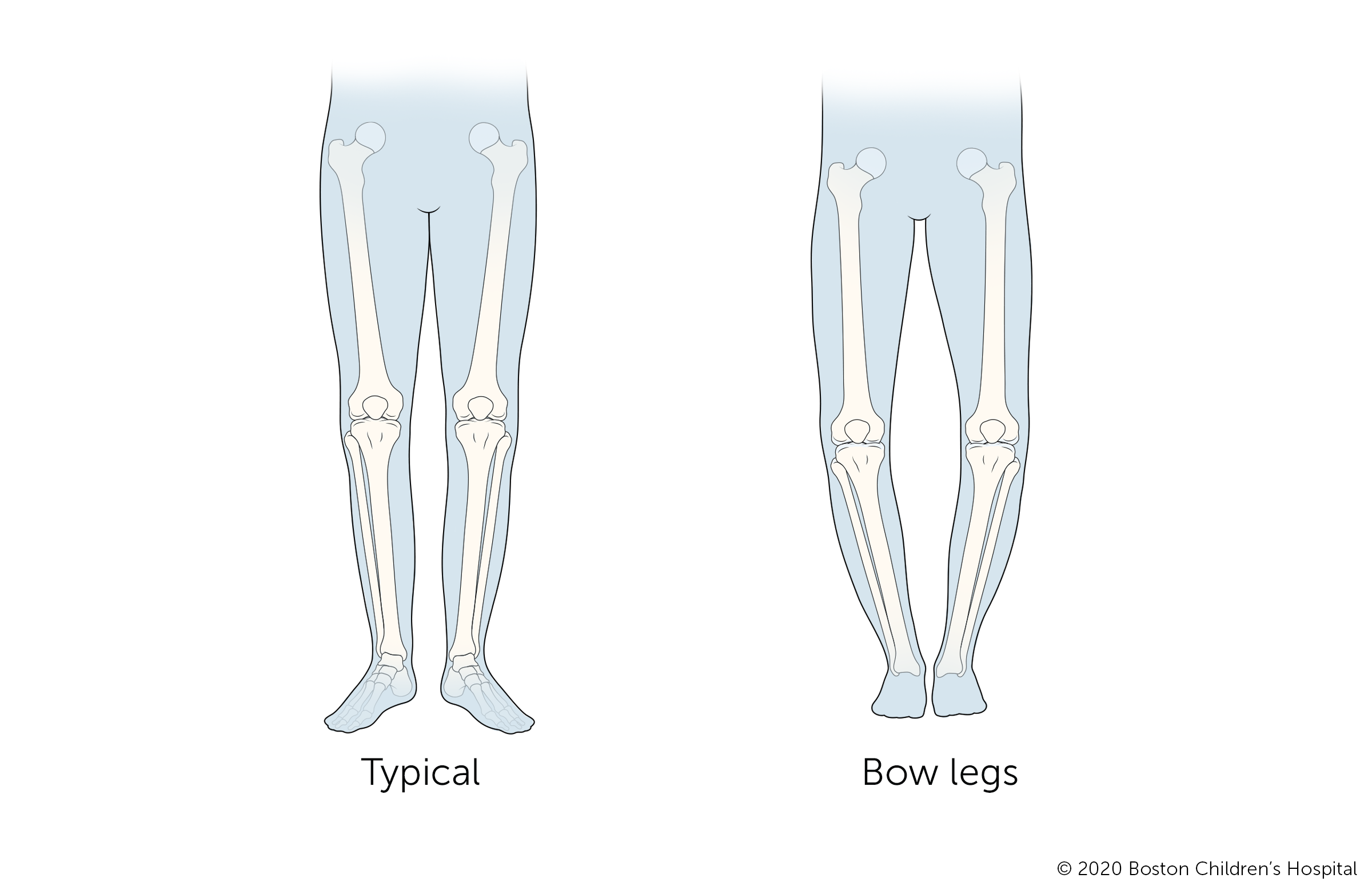
Bowlegs is considered a normal part of growth in babies and toddlers. In young children, bowlegs is not painful or uncomfortable and does not interfere with a child’s ability to walk, run, or play.
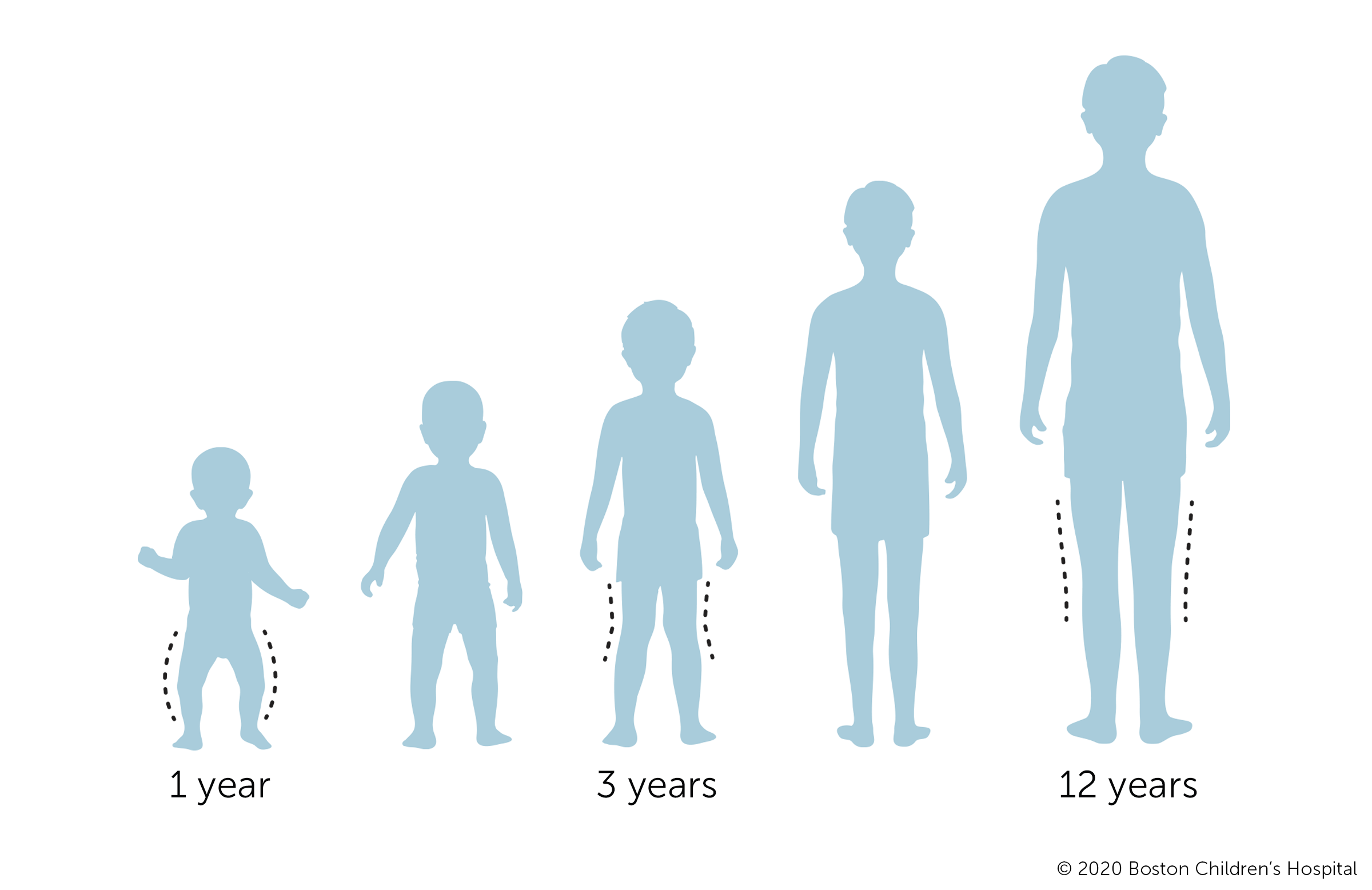
Children typically outgrow bowlegs some time after 18 to 24 months of age. In rare cases, bowlegs may be a sign of a growth disorder.
How do children’s legs and knees develop?
- Bowlegs in infants: Bowleggedness often occurs between birth and 24 months.
- Toddlers: Between about 24 and 36 months, toddlers’ legs become aligned.
- Young children: When they’re between 3 and 5 years old, children may develop knock knees, a condition in which the knees tilt inward.
- As children grow, their legs continue to straighten out. By age 7 to 8, or occasionally closer to the teens, children’s walking patterns typically become normal or near-normal.
When should parents be concerned about bowlegs?
If your child has bowlegs along with any of the following symptoms, they may have a more serious condition:
- Bowlegs that continue to get worse after the age of 2
- Asymmetric appearance of the bowing
- Limp when walking
- Knee or hip pain
- Short stature (below the fifth percentile)
If your child has any of these symptoms, talk to their pediatrician or an orthopedic specialist.
Symptoms & Causes
What are the symptoms of bowlegs?
- Knees curve outward
- Both legs have a similar curve (symmetric)
- Awkward walking pattern
- Toes point inward (known as intoeing)
- Clumsiness or frequent tripping
What causes bowlegs?
Bowlegs often develop in the child’s first year as part of natural growth for no known cause. Some babies are born with bowlegs. This can happen as the baby grows and the space inside their mother’s womb gets tighter, causing the leg bones to curve slightly. In most cases, children’s legs straighten out as they grow and develop.
Certain conditions, such as Blount’s disease, metabolic disorders, and bone malformations, may cause a child’s legs to bow.
- In Blount’s disease, the shinbone (tibia) in one or both of the legs grows abnormally, causing a sharp curve below the knees. Unlike bowlegs, Blount’s disease gets worse over time.
- Some metabolic disorders, such as rickets, can also cause bowlegs. Rickets occurs when a child does not get enough vitamin D in their diet. The shortage of vitamin D weakens a child’s bones, causing their legs to bow.
Diagnosis & Treatments
How is bowlegs diagnosed?
Bowlegs is usually obvious when a child stands with their legs straight and toes pointed forward. Your child’s physician can determine the severity of bowlegs by looking at the position of your child’s legs, knees, and ankles and by measuring the distance between their knees. Observing your child as they walk also helps assess both bowing and rotation.
Most children with bowlegs do not need an X-ray. However, your child’s orthopedic specialist may order an X-ray if they see signs or symptoms that your child’s bowlegs could be related to another disorder. Such signs include bowlegs that continue to get worse after the age of 2, asymmetric bowing of the legs, or a limp when walking.
How is bowlegs treated?
Most children with bowlegs do not need medical treatment. Your child’s doctor will observe your child over time to be sure their legs straighten out on their own.
If your child’s bowlegs are caused by another condition, such as rickets or Blount’s disease, their doctor will treat that condition.
Your child’s doctor will take several factors into account to decide the best treatment for your child’s bowlegs:
- Your child’s age, overall health, and medical history
- The extent of the condition
- The cause of the condition
- Your baby’s tolerance for specific medications, procedures, or therapies
- Probability that bowlegs will interfere with your child’s future mobility
If your child’s legs do not grow straighter on their own, or if your child’s legs continue to become more curved after age 2, their doctor may recommend a corrective brace or surgery.
- Leg braces can slowly move the legs into a straighter position.
- Osteotomy surgery on the upper part of the shinbone can correct the lower limb alignment. This procedure is used only for the most severe cases of bowlegs.
How are other conditions related to bowlegs treated?
Treatment for Blount’s disease usually involves a combination of non-surgical and surgical measures that include wearing a special brace. The brace, known as a modified knee-ankle-foot orthosis (KAFO), must be worn day and night (23 hours a day). This releases the compression in the area of the knee to allow your child’s legs to grow normally. Young children with Blount’s disease may not need surgery if the brace alone corrects the problem.
Rickets can be corrected by adding vitamin D and calcium to your child’s diet. Children diagnosed with rickets are usually referred to an endocrinologist for help with their medical management.
What is the long-term outlook for children with bowlegs?
Most children with bowlegs grow out of the condition and are able to walk, run, and play without problem.
Severe bowlegs or bowlegs caused by an underlying condition often require treatment. Otherwise, severe bowlegs can lead to leg deformity, trouble walking or running, and a higher risk of arthritis as an adult.
How we care for bowlegs at Boston Children’s Hospital
As a national and international orthopedics referral center, our Orthopedics and Sports Medicine Department has vast experience managing all aspects of bowlegs. Our Lower Extremity Program offers comprehensive assessment, diagnosis, and treatment for children and young adults with conditions affecting their lower limbs. We have extensive experience treating disorders of the feet, ankles, knees, legs, and hips. Whether the patient is an infant, child, or adolescent, our goal is to help our patients live full, independent lives.
Practitioners Who Specialize In This Condition (3)
Colyn Watkins, MD
Orthopedic Surgeon, Orthopedics and Sports Medicine Department
Assistant Professor of Orthopedic Surgery, Harvard Medical School


Ingrid Holm, MD, MPH
Associate in Pediatrics, Division of Genetics and Genomics and Division of Endocrinology
Professor of Pediatrics, Harvard Medical School
