Contact Us
Contact the Orthopedics and Sports Medicine Department
617-355-6021
Fax
617-355-0459
International
+1-617-355-5209


A broken bone is called a fracture. A break in the bone that goes through the growth plate is called a growth plate fracture. Growth plate fractures vary from mild to serious injuries. They are usually diagnosed by physical examination and an X-ray.
Growth plates are soft areas of developing cartilage at the ends of a child’s bones. The long bones in a child’s body grow not from the center of the bone outward, but from the growth plates, which help define the length and shape of the bone.
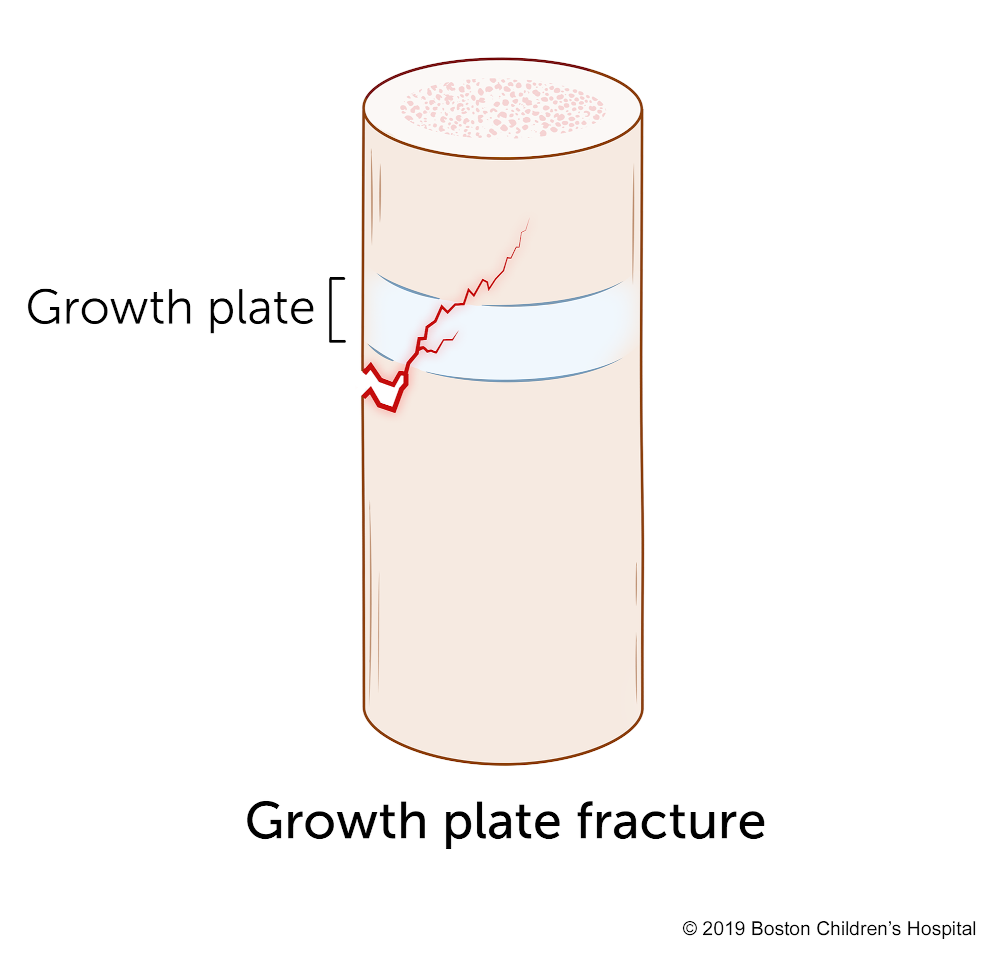
As a child’s bones are growing and developing, the growth plates are prone to injury. If a growth plate injury is not treated properly, it can interfere with the healthy growth of the bone. When a child is fully grown, the growth plates harden into bone.
The symptoms of a growth plate fracture vary depending on the degree of seriousness. Sometimes, a child may feel mild pain, and other times the injury may be more visible and urgent.
Symptoms of a growth plate fracture may include:
Seek medical care right away if your child displays any of symptoms of a fracture. If you can see the bone poking out through the skin, do not move your child and call 911 immediately.
Growth plate fractures happen the way any fracture can happen, most commonly through sports or playground accidents.
Your child’s immediate and long-term treatment depends on the how severe the fracture is. If your child’s bone has been displaced or moved, it may require more extensive treatment than if it is non-displaced.
If your child has a minor, non-displaced fracture, the doctor may treat it like a sprain and suggest a splint, cast, or walking boot to protect the area for four to six weeks. Usually, these types of fractures do not require long-term care.
When a child’s bone has moved or been displaced, an orthopedist can set the bone back in place in the emergency room without having to operate. Your child will be sedated, and the doctor will use X-rays to determine where to properly place the bone. Once the bone has been set, a cast will keep it in place while it heals. Usually, you will be able to go home that night. In some cases, children are admitted to the hospital to make sure there is not too much swelling. Follow-up care may include physical therapy and doctor’s visits for the first six months.
If your child has an unstable growth plate fracture that is not held securely in place with a cast, it may require surgery. To increase the chances of the bone setting properly, your child’s doctor will decide very early in treatment whether to operate. If the fracture does involve a joint, then an incision can be made to realign the joint and hold it in place with screws, a plate, or a pin. Patients who go through surgery receive a cast and long-term follow up instructions, which may include physical therapy.
A growth plate injury may affect the angle of bone growth and overall height of a child. When a body part with two parallel bones, like the wrist, experiences growth arrest, each bone needs to be examined separately. If one bone stops growing, there is risk that the parallel bone might continue to grow and surpass it, making the wrist grow at an angle.
If one leg were to stop growing because of a growth arrest, the legs could end up being different lengths. Since height is determined by multiple growth plates in the hips, knees, and ankles, a growth plate injury in just one of these areas may not impact your child’s height significantly. Orthopedic surgeons can usually prevent angled bone growth or unequal bone growth with early treatment.
An orthopedic specialist can usually determine whether a child’s bones have stopped growing within the first three to six months after a growth plate injury. If the bone has stopped growing, your child’s doctor may recommend stunting the bone that matches it so the two limbs will be the same length.
If the bone has continued to heal and grow after treatment, then your child may not require more follow-up care.
Every year the Orthopedics and Sports Medicine Department at Boston Children’s Hospital treats thousands of children, adolescents, and young adults with fractures of all complexities. We see a large volume of pediatric growth plate fractures in children every year and have the experience and knowledge to treat them well.
At our Orthopedic Urgent Care Clinics, we care for injuries that require prompt medical attention but are not serious enough to need emergency room care. We offer urgent care services in four locations: Boston, Waltham, Peabody, and Weymouth.