Popular Search Terms


What is flexible flatfoot?
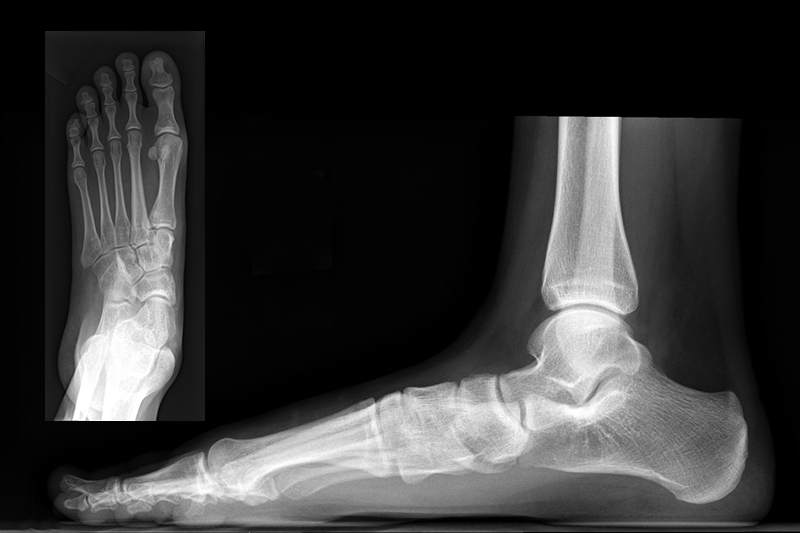
Flexible flatfoot is a common childhood condition in which a child has very little or no arch in their feet. Almost all toddlers have flat feet, but most children develop arches as they grow and develop.
Some children with flexible flatfoot also have very tight Achilles tendons (the tendons that connect the muscles in the calves to the back of the heels). Some children's feet are also pronated: their heel bone collapses outward, and their ankle collapses inward when they stand. This is common but does not affect every child with flatfoot.
Most often, flexible flatfoot does not interfere with a child’s ability to run or play sports. But for a small number of tweens and teens, flatfoot becomes painful, particularly when walking or standing for long periods. Flexible flatfoot is more common in boys than girls.
Flexible flatfoot is different than rigid flatfoot. In rigid flatfoot, which is often the result of tarsal coalition, two or more bones in the middle or back of the foot are fused.

February 3, 2025
Unstoppable: Flatfoot correction helps Jacob take control
The first time Dr. Susan Mahan examined Jacob’s feet, she pressed on a tender spot near one of his arches. “You see that?” Jacob’s mother, Lucie, remembers her saying. “That bone isn’t supposed to be…
September 27, 2024
Novel procedure may bridge the treatment gap for symptomatic flexible flatfoot
Most children develop arches in their feet by early adolescence. About 20 percent, however, have pes planovalgus (PPV), also known as flexible flatfoot. Most children with PPV can participate in…
September 30, 2022
Innovative flatfoot surgery releases Quinn’s inner athlete
By the time he was 10, Quinn’s parents had tried almost everything. Dawn would sometimes massage his feet to relieve the pain and tightness caused by flexible flatfoot, a condition in which a…
Symptoms & Causes
What are the symptoms of flexible flatfoot?
Many children with flexible flatfoot have no symptoms other than the lack of an arch in their feet. Your child’s symptoms may include:
- Abnormally small arches or no arches in the feet
- Arches that appear when your child stands on their toes and disappear when their feet are flat on the ground
- Tight Achilles tendons
- Outward-pointing toes and feet
- Inward-rolling ankle (pronation)
- Pain in the arches of the feet
- Pain along the shin bones
What causes flexible flatfoot?
Flexible flatfoot often has no known cause, though sometimes it runs in families. Obesity can also increase a child’s risk of flatfoot.
Diagnosis & Treatments
How is flexible flatfoot diagnosed?
To diagnose flexible flatfoot, your child’s doctor will examine your child’s feet. This may include watching your child standing on their toes, then lowering their heels down to the floor. Diagnosis also includes a medical history in which the doctor will ask if your child has any other disorders. They will want to know if anyone else in your family has flatfoot.
How is flexible flatfoot treated?
Flexible flatfoot only requires treatment if your child has ongoing pain from the condition. A large majority of children with painful flexible flatfoot can be treated without surgery.
Non-surgical treatments may include:
- Physical therapy
- Stretching
- Shoe inserts to support the arches of your child’s foot
Surgical treatment for flexible flatfoot
If your child reaches adolescence and their flexible flatfoot is painful despite conservative treatment, their orthopedist may recommend surgery. Surgery is only an option after a child’s feet are fully developed, around age 8 or 10.
The traditional surgery for flexible flatfoot is foot reconstruction, which involves cutting bones in the foot and reorienting them.
However, a minimally invasive procedure, subtalar extra-articular screw arthroereisis (SESA), has shown promising results for correction of flexible flatfoot. Developed in Italy and practiced there for several decades, SESA surgery involves inserting a screw through a small incision near the ankle into the joint. The screw stabilizes the foot and prevents the bones from returning to a flat position. Within three years, the screw can typically be removed. Boston Children’s is one of the only orthopedic centers in the U.S. where this procedure is offered.
Compared to traditional foot reconstruction, SESA surgery takes a fraction of the time to perform. Patients can typically start putting weight on their foot within a week of surgery. If your child’s Achilles tendon is lengthened during the procedure, they may need to wear a walking cast for a month before transitioning to a boot and starting physical therapy.
How we care for flexible flatfoot at Boston Children’s Hospital
The Lower Extremity Program at Boston Children's Hospital offers comprehensive assessment, diagnosis, and treatment for children of all ages with flexible flatfoot and other conditions affecting their lower limbs. We have extensive experience treating disorders of the feet, ankles, knees, legs, and hips, and are at the forefront of advancing innovative treatments such as SESA surgery. Our goal is to help our patients of all ages live full, independent lives.
Practitioners Who Specialize In This Condition

Hunter Hatton, MSAT
Injury Prevention Specialist, The Micheli Center for Sports Injury Prevention; Sports Medicine Division

