Popular Search Terms


Immersive Design System | Human Factors & Systems Design
Human factors and systems engineering to optimize healthcare processes, environments, and care
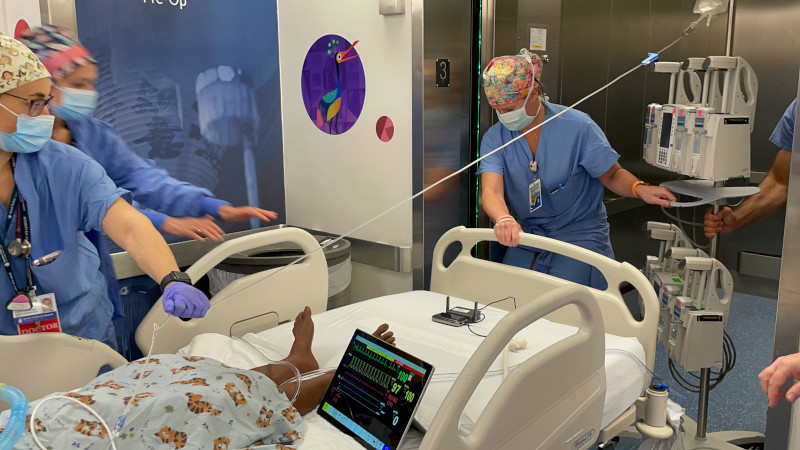
Testing patient transport from Hale building to the MSICU at Boston Children's Hospital.
Engineering out hazards and improving safety in patient care
Health care is becoming increasingly complex, and there is a need to design health care systems to help minimize the potential for error, improve efficiency, and enhance patient satisfaction. Simulation in this context can be used to identify and ameliorate potential hazards in our health care systems, ultimately helping people do their best work by designing better systems and environments in health care. Because all humans are fallible and the more tired, overworked, or stressed we are, the more mistakes are likely, we need to engineer and design our processes and workflows to help minimize the potential for error.
We partner with teams across all clinical units and departments, as well as the Program for Patient Safety and Quality, and the Office of Health Equity and Inclusion to understand the factors that impact human performance and the functioning of our systems. These include the clinical environment, tasks to be done, equipment and technologies used, and the organizational conditions, culture, and climate where our work occurs. We can use simulation experiences to help identify hazards and opportunities for improvement, ultimately redesigning systems and environments to improve patient safety and care. This work involves continuous improvement and is an important part of our journey towards high reliability.
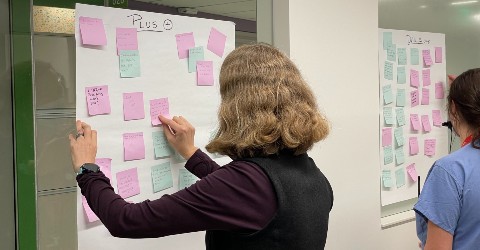
We use specific simulation-based tools to help engineer safer and more efficient health care environments and processes and deliver optimal, evidence-based care. These tools range from table-top simulations and process mapping to highly realistic immersive scenarios.
Combining human factors, design thinking, and immersive simulation methodologies, we develop and implement innovative solutions to problems, improve the way we interact with our clinical environments, and test new processes and health care environments prior to impacting patient care for safety, efficiency, and effectiveness.
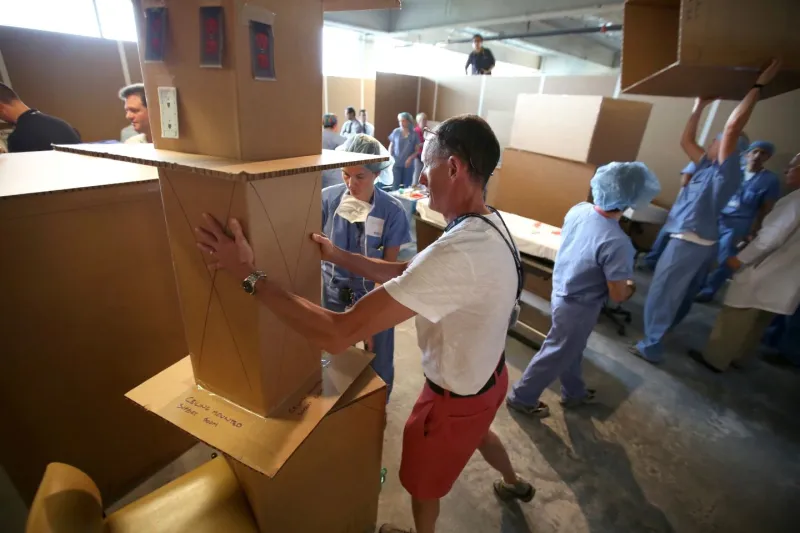
Children's 'cardboard city' aids in design of clinical tower
Image
Human factors & systems design in action
- The COVID-19 pandemic introduced so many variables to patient care processes, policies, and procedures. Working in lockstep with our clinical partners, we designed safe patient transport, airway management, and complex care procedures even while requiring reduced clinical staffing to minimize the risk of spreading the virus to our patients. We enabled clinical teams to seamlessly adapt and incorporate new practices across Boston Children’s and shared our knowledge with partner institutions around the world.
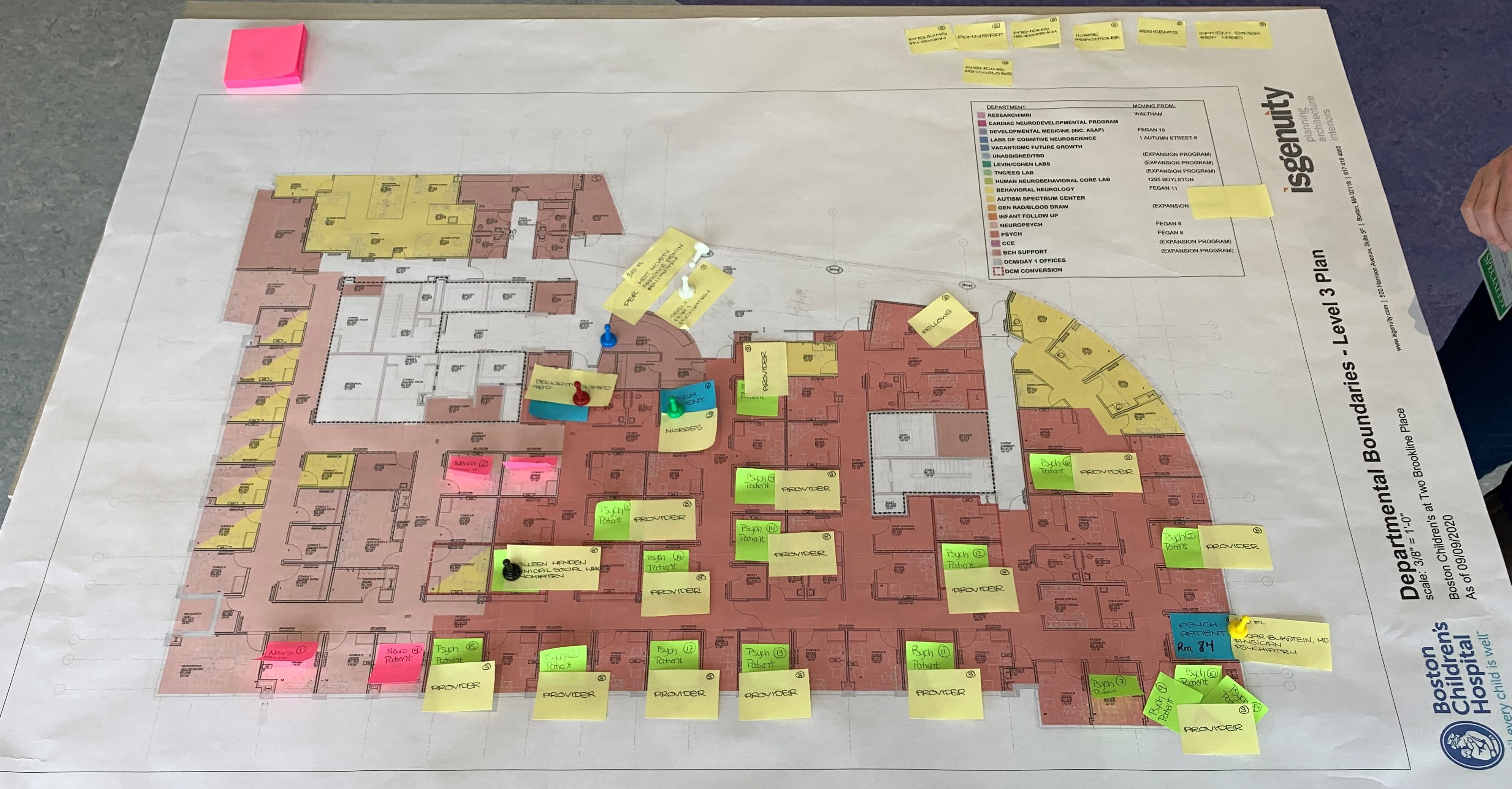
- In preparation for opening Boston Children’s new dedicated behavioral health facility, 2 Brookline Place, we developed novel medical and mental health emergency response processes and tested new clinical environments to identify and ensure patient and staff safety. As the pandemic continues to take its toll on children’s mental well-being, caring for our patients’ mental health needs has never been more important. We’re proud to have been a part of designing this facility for our patient families.
- As the hospital prepared to open its new 12-floor Hale Building, we worked tirelessly with every unit to define patient care in new clinical environments. By testing every aspect of these new spaces, we’re helping discover hidden safety hazards, build predictable and repeatable processes, and transform the unknown into second nature for our staff.