Contact Us
Contact the Hand and Orthopedic Upper Extremity Program
617-355-6021
International
+1-617-355-5209


Nerves carry signals between your brain and other parts of your body. These signals make movements like lifting your arm possible. They’re also the reason you feel sensations like the clothes against your skin.
Nerve injuries interfere with these signals and can lead to a loss of movement or feeling in the affected area. When a muscle doesn’t receive signals from the brain, it can’t function and grows weak.
When an injury interferes with communication between a nerve and a muscle in the arm or leg, it’s called a peripheral nerve injury. While there are some similarities, peripheral nerve injuries are different from spinal cord injuries. For instance, at Boston Children’s Hospital, you may see a surgeon in the Hand and Orthopedic Upper Extremity Program. These specialists have deep experience repairing peripheral nerve damage in the hands, arms, legs, and feet.

Answers to questions about nerve injuries, how some severe nerve damage can be repaired, and why it’s important to seek treatment promptly.
Some nerve injuries are temporary — if the injury is mild to moderate, a nerve may repair itself. But if the nerve damage is severe, and nerve signals aren’t restored in 12 to 18 months, the muscle will never regain function.
If you suspect your child has nerve damage, it’s important to bring them to a doctor who specializes in nerve repair as soon as possible. New techniques have made it possible to repair damaged nerves and restore full or partial function to the affected muscles.
Symptoms of nerve injury depend on which nerve is damaged and how severely. Some nerve injuries are painful, but other nerve injuries reduce the sensation of pain.
If your child has weakness, numbness, or lost feeling or function, seek prompt medical care.
Nerve injury symptoms may include:
Nerves are made up of bundles of fibers surrounded by a protective sheath. These fibers can get damaged during accidents, falls, or sports injuries that stretch, compress, or rupture the nerve.
Nerve injuries can happen in a number of ways:
Diagnosing a nerve injury begins with a physical exam. The doctor will ask your child to move their arm or leg so they can look for signs of reduced mobility. One or more of the following tests may help identify nerve damage and the extent of the injury:
Your child’s treatment will depend on their symptoms and the severity of the injury. If their nerve was stretched or compressed, the injury may heal with minimal treatment. Regular follow-up visits are important so your child’s doctor can make sure the nerve continues to recover.
Severely damaged nerves and nerves that have been ruptured or cut can sometimes be repaired with surgery. Nerve repair surgery creates a new pathway for signals to travel to and from the brain and the muscle.
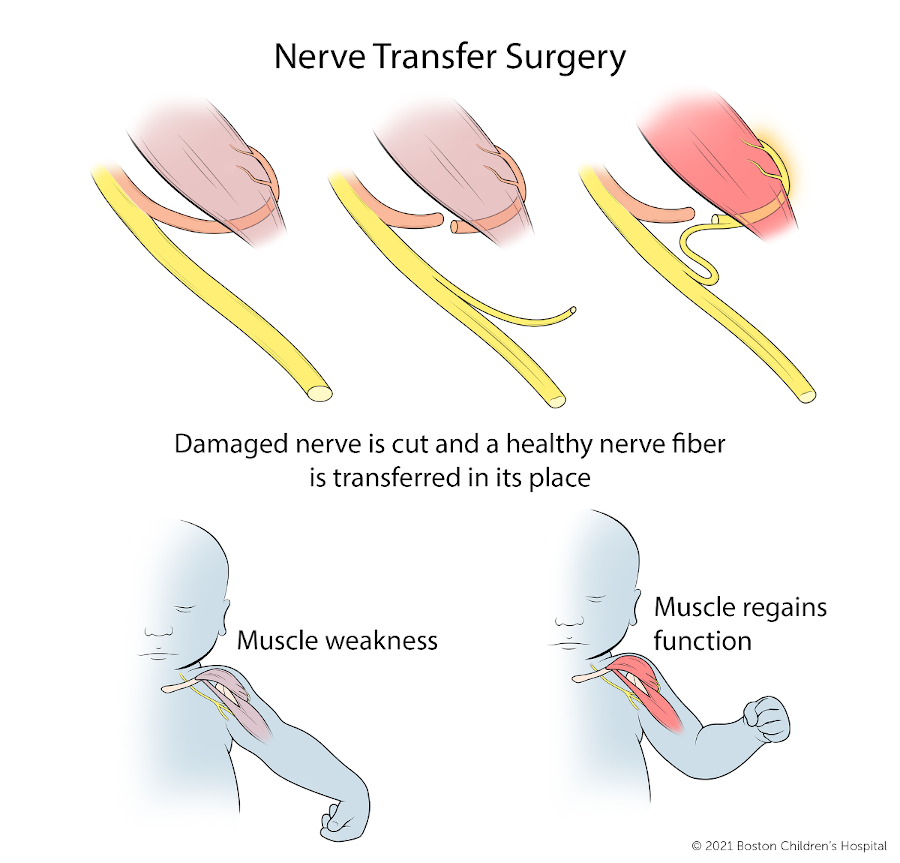
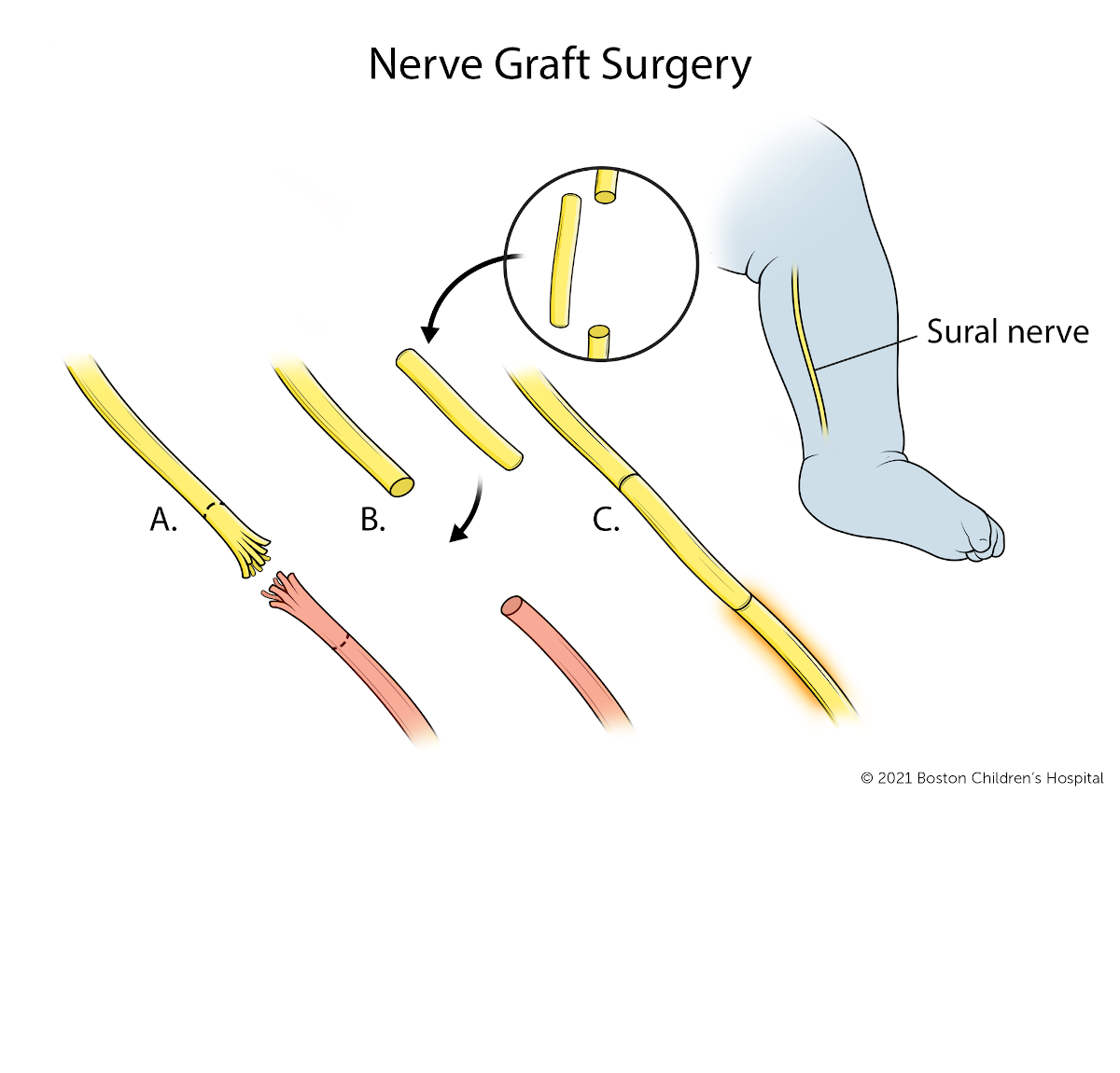
Nerves grow much more slowly than bones and muscles, therefore, recovery from nerve repair surgery can take up to two years. Physical therapy will help your child’s brain learn how to communicate with the muscle through the new pathway.
As a national and international referral center for brachial plexus injury, the Hand and Orthopedic Upper Extremity Program has treated hundreds of babies, children, adolescents, and young adults with traumatic nerve injury. We work closely with our colleagues in the Department of Neurology, Department of Neurosurgery, Department of Plastic and Oral Surgery, and Pain Treatment Center to ensure our patients with nerve injury receive comprehensive care.